EV Battery Recycling Business Model Explained + Profit Potential
The world is moving towards electric vehicles, making lithium battery recycling more crucial. “The best way to predict the future is to invent it,” said Alan Kay. This shows the new ideas coming up in recycling.
You’re joining a growing field where profit margins are substantial. Recycling operations make 20-30% profit on materials they recover. The EV battery recycling business model is seen as both profitable and sustainable.
Table of Contents
Understanding the Importance of EV Battery Recycling
The electric vehicle revolution is driving the need for effective EV battery recycling strategies to minimize waste. As the demand for electric vehicles grows, so does the need for sustainable battery management practices. You are part of a crucial industry that is shifting towards more eco-friendly solutions.
Recycling EV batteries is not just a moral imperative; it’s also a sound business strategy. The recovery of valuable materials from lithium batteries presents a compelling business case for recycling operations. A typical lithium-ion battery contains several precious metals and materials that command significant market value.
Why EV Battery Recycling Matters
EV battery recycling matters because it helps to recover valuable materials, reducing the need for primary production and minimizing waste. By adopting eco-friendly battery disposal methods, you can significantly reduce the environmental impact of battery waste. “Recycling is a critical step towards achieving a more sustainable future for the electric vehicle industry,” as noted by industry experts.
“The recycling of lithium-ion batteries is essential for reducing waste and recovering valuable materials, which can help to minimize the environmental footprint of electric vehicles.”
Environmental Impact of Improper Disposal
Improper disposal of EV batteries can lead to soil and water contamination, posing significant environmental risks. The importance of reducing environmental impact of battery waste cannot be overstated. You must consider the long-term consequences of your business practices on the environment.
By understanding the environmental impact of improper disposal, you can better appreciate the need for effective EV battery recycling strategies. Implementing sustainable practices not only benefits the environment but also enhances your business reputation and compliance with regulatory requirements.
Overview of Current EV Market Trends
The electric vehicle (EV) market is growing fast. This is because more people want green ways to travel. Knowing the current trends in the EV battery recycling sector is key.
Growth in Electric Vehicle Adoption
More people are choosing electric vehicles worldwide. This is thanks to government help, cheaper batteries, and caring for the planet. You can make money by investing in recycling technologies for electric vehicle batteries. This way, batteries are recycled without harming the environment.
Some important facts about EV growth are:
- Over 2 million EVs were sold worldwide in 2022, a big jump from before.
- Many countries aim to stop using cars that burn fuel, which will increase EV demand.
- The EV battery market is set to grow a lot, thanks to better battery tech.
The Demand for Sustainable Solutions
As EVs become more popular, so does the need for circular economy practices for batteries and green energy storage sustainability. You can be a big help by starting sustainable battery recycling. This will lessen the harm to our planet.
Australia is in a great spot for sustainable battery recycling. It has lots of lithium and a growing battery industry. By using new recycling tech, you can make EV batteries better for the environment. This will help us have a greener future.
Important things to work on are:
- Make sure EV batteries are collected and recycled well.
- Put money into research to make recycling better.
- Work with EV makers and others to make a recycling system that works.
Key Components of an EV Battery Recycling Business Model
To make an EV battery recycling business profitable, you need to know the key parts. A good business model has several elements. These work together to make sure the business is both profitable and sustainable.
Collection and Transportation of Batteries
The first step is collecting and moving spent batteries. You need a strong network of collection points. Also, you must work with logistics providers for safe and efficient transport. Building a strong logistics network costs a lot, from $500,000 to over $3 million.
To improve collection and transport, try these:
- Work with EV makers and dealers to get batteries.
- Buy special transport gear for EV batteries.
- Use a tracking system to keep batteries safe and follow rules.
Processing and Reclamation Techniques
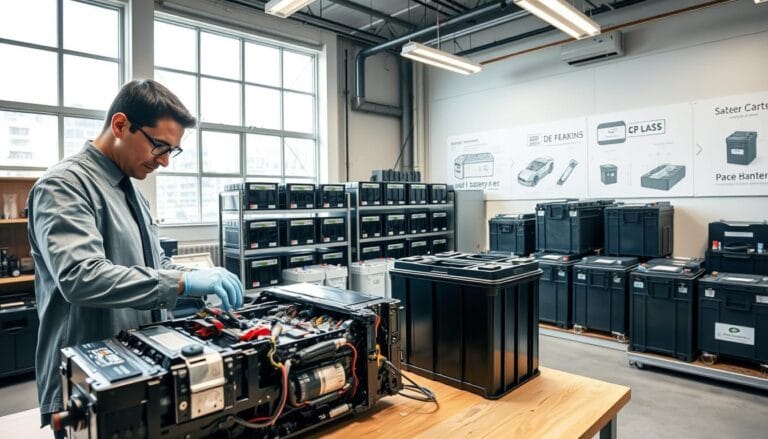
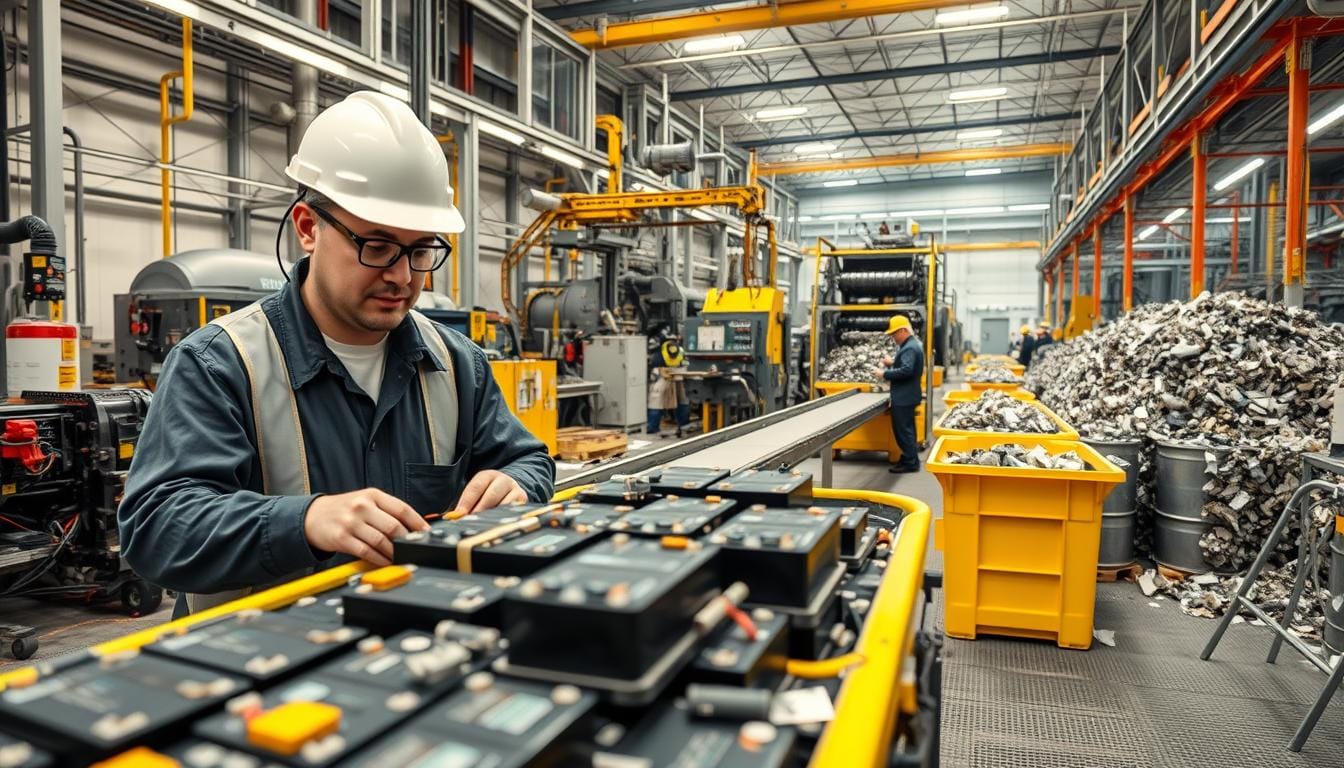
After collecting and moving batteries, you process and reclaim them. This step uses new ways to recycle batteries to get valuable materials like lithium, cobalt, and nickel. You need advanced methods to protect the environment and get as much material as possible.
| Material | Recycling Technique | Value |
|---|---|---|
| Lithium | Hydrometallurgical processing | High |
| Cobalt | Pyrometallurgical processing | High |
| Nickel | Electrochemical processing | Medium |
Distribution of Recycled Materials
The last step is distributing the recycled materials. This part uses smart recycling strategies to sell the materials to makers and other industries. You need to know the market well and meet customer needs.
To do better in distribution, think about these:
- Do a market study to find customers for recycled materials.
- Make partnerships with makers to sell recycled materials.
- Use marketing to show the value of recycled materials.
Regulatory Framework Governing EV Battery Recycling
For businesses in EV battery recycling, knowing the rules is key. This ensures they follow the law and get benefits. The rules come from both the federal and state governments. They aim to make recycling better for the planet.
Federal Regulations and Guidelines
At the federal level, the focus is on safe and green battery disposal. The Environmental Protection Agency (EPA) is in charge of managing hazardous waste, like EV batteries. Companies must follow EPA rules on handling and disposal to protect the environment.
Government help makes recycling EV batteries more profitable. This includes tax breaks and grants for new recycling tech. These incentives help lower costs and support growth.
- Compliance with EPA’s hazardous waste regulations
- Adherence to transportation regulations for hazardous materials
- Participation in federal programs offering subsidies for recycling initiatives
State-Level Legislation and Compliance
Businesses also face rules from states, which can differ a lot. Some states have laws that make companies take back and recycle their products. This helps use circular economy practices for batteries and cuts down on waste.
States like California and New York have strict rules to lessen battery waste harm. Companies in these places must follow specific rules, like recycling and labeling.
- Research state-specific regulations on EV battery recycling
- Ensure compliance with EPR laws where applicable
- Stay updated on changes to state legislation affecting the industry
By following both federal and state rules, EV battery recycling companies can avoid trouble. They also help the environment and support eco-friendly battery disposal methods.
Identifying Your Target Market
To start a successful EV battery recycling business, knowing your target market is key. The global lithium-ion battery recycling market was worth about $6.5 billion in 2022. It’s expected to grow by over 20% each year until 2030.
This growth shows a big demand for recycling technologies for electric vehicle batteries. Finding the right customers is more important as the industry grows. Your main customers will be automakers, manufacturers, and third-party recycling facilities.
Automakers and Manufacturers
Automakers and manufacturers are key in the EV battery recycling world. They make the batteries that need recycling. By targeting them, you can get a steady flow of used batteries for recycling.
Offering sustainable battery management can also attract them. Many automakers want to reduce their environmental impact. Working with a reliable recycling service helps them meet their sustainability goals.
| Company Type | Recycling Needs | Potential Benefits |
|---|---|---|
| Automakers | Large volumes of used EV batteries | Closed-loop recycling, reduced waste |
| Manufacturers | Production scrap and defective batteries | Cost savings on raw materials, enhanced sustainability |
Third-Party Recycling Facilities
Third-party recycling facilities are also crucial. They collect and process used batteries from various sources. This includes consumers and businesses.
By working with these facilities, you can reach more people and process more batteries. This partnership can lead to more profitable battery recycling strategies. You’ll benefit from economies of scale and shared knowledge.
Knowing what automakers and third-party recycling facilities need helps you tailor your services. This ensures a successful and profitable EV battery recycling business.
Financial Considerations for Your Business
Starting an EV battery recycling business means you need to understand the money side well. You’ll spend a lot of money at the beginning. This includes setting up a place, buying equipment, and hiring staff.
Initial Investment and Startup Costs
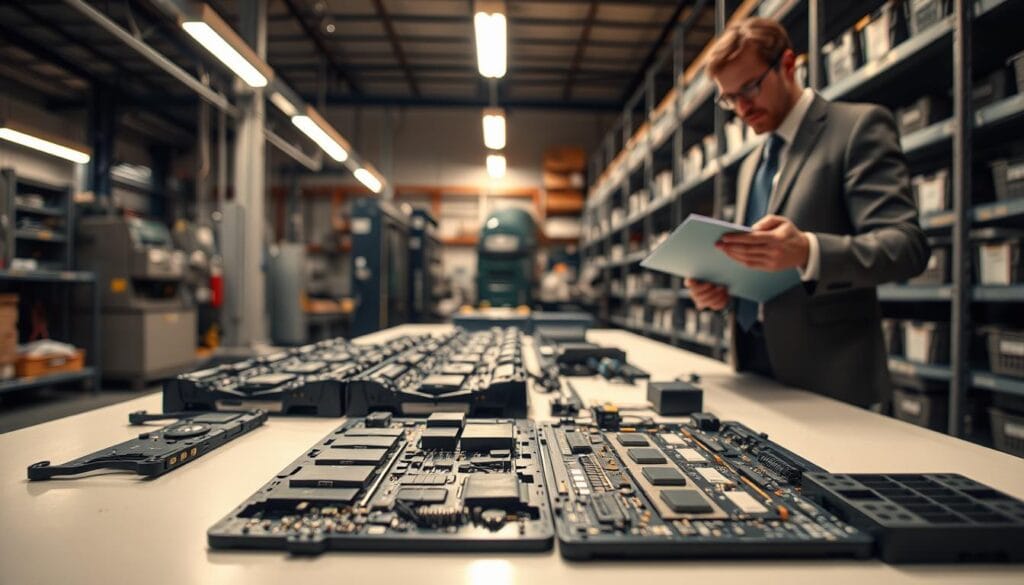
The money needed to start can be a lot. You’ll have to pay for a place, special tools, and trained workers. Costs can vary a lot, from hundreds of thousands to millions of dollars, based on how big and advanced your setup is.
Ongoing Operational Expenses
After you start, you’ll keep spending money. This includes keeping equipment running, paying for utilities, and salaries. You’ll also spend on moving and storing batteries. Keeping these costs down is important for making money.
Revenue Streams in Recycling
You can make money in different ways. You can sell materials like lithium and cobalt to battery makers. Or, you can offer battery disposal services to car companies and people. Having more than one way to make money helps your business stay strong.
By planning your start-up costs, managing daily expenses, and finding different ways to make money, you can build a successful EV battery recycling business. This business will help with green energy storage sustainability and innovative approaches to battery recycling. It will also help with battery disposal solutions.
Partnerships and Collaborations in the Industry
Effective partnerships and collaborations are key for a sustainable EV battery recycling business. Working with various stakeholders ensures a steady battery supply and reliable outlets for recycled materials.
Working with EV Manufacturers
Collaborating with EV manufacturers gives your business a steady battery supply. This partnership is good for both sides, as manufacturers seek sustainable end-of-life solutions. Together, you can create take-back programs or collection strategies that help everyone.
Collaborating with Research Institutions
Research institutions are crucial for improving recycling technologies. By teaming up with them, you get access to the latest research and techniques. This partnership can also lead to new recycling technologies that benefit the whole industry.
To show the power of partnerships in EV battery recycling, look at this table. It highlights the benefits of working with different stakeholders:
| Partner | Benefits | Potential Outcomes |
|---|---|---|
| EV Manufacturers | Steady supply of used batteries, development of take-back programs | Increased efficiency, reduced costs |
| Research Institutions | Access to cutting-edge research, innovation in recycling technologies | Improved recycling rates, new business opportunities |
Technology and Innovation in Recycling Processes
The electric vehicle (EV) industry is growing fast. This growth has raised concerns about battery waste’s environmental impact. To address this, new recycling technologies and research are being developed.
Advanced Recycling Techniques
New recycling tech is changing the lithium battery recycling world. Innovative approaches to battery recycling include mechanical, hydrometallurgical, and pyrometallurgy methods. These methods help recover valuable materials like lithium, cobalt, and nickel.
Using eco-friendly battery disposal methods is becoming common. Companies are adopting closed-loop recycling systems. This reduces waste and saves natural resources.
| Recycling Technique | Description | Recovered Materials |
|---|---|---|
| Mechanical Separation | Physical separation of battery components | Copper, Aluminum, Lithium |
| Hydrometallurgical Processing | Chemical processing to extract metals | Cobalt, Nickel, Lithium |
| Pyrometallurgy | High-temperature processing to extract metals | Cobalt, Nickel, Copper |
Importance of Research and Development
Research and development are key to better recycling. By investing in R&D, companies can create new tech. This tech increases material recovery, cuts energy use, and reduces waste.
As the EV battery recycling industry grows, so will innovation. We can look forward to even more efficient and green recycling methods in the future.
Challenges Facing the EV Battery Recycling Industry
The EV battery recycling sector faces many hurdles that slow its growth. It’s key to understand these challenges to find ways to beat them.
Supply Chain Issues
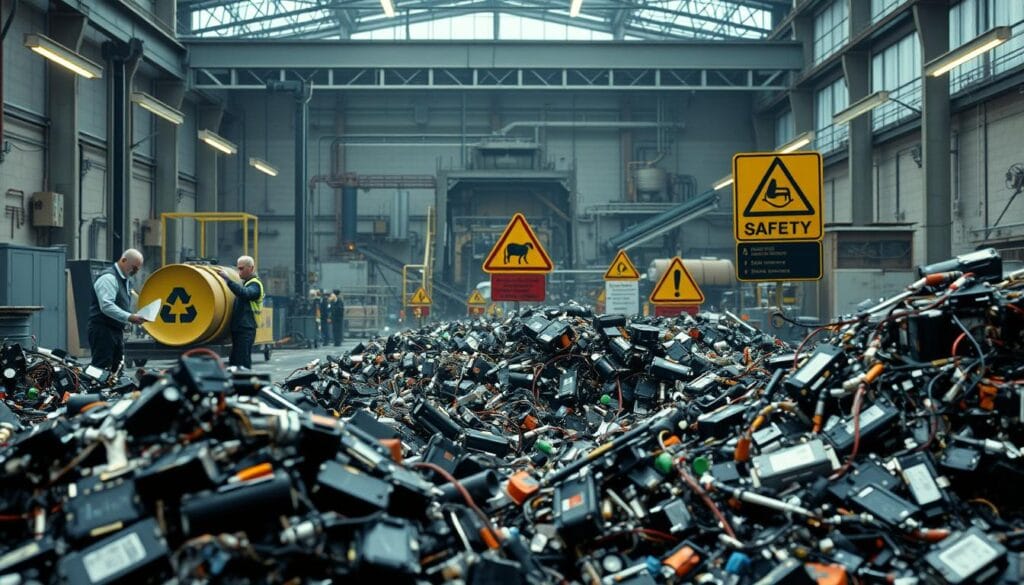
Supply chain problems are a big challenge for EV battery recycling. Gathering used EV batteries is complex, needing many players and a smooth logistics system. Efficient battery disposal solutions are vital for handling batteries responsibly.
Different battery designs and materials make recycling hard. Each maker uses unique materials and designs. This calls for flexible and adaptable recycling technologies that work for all types of batteries.
Market Volatility and Material Demand
Market ups and downs are another big challenge. The need for recycled materials can change, affecting recycling profits. Profitable battery recycling strategies are needed to keep recycling businesses afloat.
The price of materials like lithium, cobalt, and nickel also matters. Price swings can make recycling less profitable. The industry must work on sustainable and cost-effective recycling processes to handle these changes.
To reach green energy storage sustainability, we must tackle these issues. By improving supply chains, recycling tech, and business models, the EV battery recycling industry can grow and help our planet.
Case Studies of Successful Recycling Businesses
Looking at EV battery recycling businesses can teach us a lot. These stories show us the strategies and innovations that are making this industry grow. By studying these examples, we can learn what makes a recycling business thrive and how to apply these lessons to our own work.
Innovations in the Field
Many companies are leading the way with innovative approaches to battery recycling. They’re showing us how a circular economy can work in the EV world. For example, some have found ways to get up to 90% of materials back from old EV batteries.
Another key area is circular economy practices for batteries. Companies are designing recycling processes that cut down waste and use materials again. This approach not only helps the environment but also opens up new ways to make money.
| Company | Innovation | Impact |
|---|---|---|
| Redwood Materials | Advanced battery recycling technology | Recovers up to 95% of materials |
| Lithium Americas | Sustainable lithium extraction methods | Reduces environmental footprint |
| Li-Cycle | Closed-loop recycling process | Produces high-purity materials for reuse |
Lessons Learned from Industry Leaders
Industry leaders in EV battery recycling have shared important lessons. One key point is the need for sustainable battery management from start to finish. This includes everything from making batteries to recycling them.
Another important lesson is the value of working together. Companies can share knowledge, save money, and create better recycling technologies by partnering up.
Future Outlook for the EV Battery Recycling Market
The future of EV battery recycling is bright, thanks to growing demand for green practices. As electric vehicles become more common, recycling them efficiently is key.
Anticipated Trends and Challenges
Several trends will shape the EV battery recycling market. New recycling technologies will make the process cheaper and better. Yet, the industry will face hurdles like complex supply chains and the need for standard recycling methods.
The global lithium-ion battery recycling market is set to grow fast, with a CAGR over 20% by 2030. This growth comes from more electric vehicles and more battery waste.
Opportunities for Growth
Despite challenges, the EV battery recycling market offers big opportunities. Companies with smart recycling plans will thrive. Also, reducing battery waste’s environmental impact will be a major advantage for businesses.
| Year | CAGR (%) | Market Size (USD Billion) |
|---|---|---|
| 2025 | 15 | 5 |
| 2030 | 20 | 12 |
As the market grows, we’ll see more partnerships. Automakers, recycling facilities, and tech providers will work together. These collaborations will help create sustainable and efficient recycling processes.
Conclusion: Building a Sustainable Business Model
The need for EV battery recycling is growing as electric vehicles become more popular. By using eco-friendly ways to dispose of batteries and following circular economy practices, your business can thrive. This approach also supports sustainable battery management.
Long-Term Strategies for Success
To succeed in the long run, create a strong business model. Include new recycling technologies and green practices. This will help your business stand out and reduce harm to the environment.
Environmental Responsibility
Being environmentally responsible is key in EV battery recycling. Focus on sustainable battery management and eco-friendly disposal. This way, your business can help the environment and support a circular economy.
Recycling lithium batteries is a great chance for your business to grow. By following circular economy practices and being green, you can build a successful and eco-friendly business in EV battery recycling.