EV Charger Installation Near Me: How to Find & Choose the Best Installer
“The future is electric,” Elon Musk often says. This shows how fast electric vehicles (EVs) are becoming popular. If you’re thinking about getting an EV charger for your home, finding a good installer is key.
Getting a pro for EV charging solutions means your charger will be installed safely. It also keeps your investment safe. With the September 30th deadline to get the federal tax credit, picking the right installer is urgent.
You need someone who can install your ev charger installation near me smoothly. They should make sure your home has a dependable charging system.
Table of Contents
Understanding EV Charger Installation Basics
Buying an EV is just the start. Setting up a good charging system at home is key. Knowing how to install an EV charger is crucial for your charging needs.
What is an EV Charger?
An EV charger gives electric energy to your car. It’s vital for keeping your EV running. Most cars come with a basic charger. But, a Level 2 charger is better for quick charging.
Types of EV Chargers
There are three main types of EV chargers: Level 1, Level 2, and DC Fast Chargers.
- Level 1 Chargers use a standard 120-volt outlet. They’re slow, adding 2-5 miles per hour.
- Level 2 Chargers need a 240-volt station. They charge faster, adding 10-25 miles per hour.
- DC Fast Chargers charge the fastest, adding up to 200 miles in 30 minutes. They’re mostly found at public stations.
Benefits of Installing an EV Charger at Home
Home EV chargers are convenient and save money. They make your car ready to go in the morning. This saves time and cuts down on public charging visits.
Also, a home EV charger can boost your home’s value. As more people buy EVs, homes with chargers become more attractive.
Why You Need a Local Installer
Choosing a local installer for your EV charger has many benefits. It’s convenient, ensures local code compliance, and supports local businesses. A local installer knows the specific rules for EV charger installations in your area.
Convenience of Local Services
Local EV charger installers are quick to respond. This means your charger can start working faster. They’re also easier to reach for any future needs or issues.
Supporting Local Businesses
Choosing a local installer helps your community. Local businesses offer personalized service because their reputation matters to them.
Understanding Local Code Requirements
A local electrician knows all about local codes and regulations. They get the necessary permits and ensure your charger meets all standards. This avoids legal or safety problems later.
Using Online Search Engines
To find a reliable installer, start with online search engines. Look for “ev charger installation companies near me” or “professional ev charger installation services.” This will give you a list of nearby installers.
Leveraging Social Media Platforms
Social media can help too. Many local businesses are on Facebook or Nextdoor. They share their services and talk to customers there.
Asking for Recommendations
Ask people you know who have installed EV chargers for recommendations. They can share their experiences and opinions about the installer.
When looking for an EV charger installer, think about their experience with mobile EV installers. Also, check if they can give a clear ev charger installation cost estimation. And, look at their reputation for quality installations.
Evaluating Potential Installers
To ensure a smooth EV charger installation, you need to assess potential installers carefully. This involves several key steps that help you make an informed decision.
Checking Credentials and Certifications
First and foremost, it’s essential to verify the credentials and certifications of potential EV charger installers. Look for licensed contractors who have specific training or certification in EV charging equipment. You can check manufacturer-approved installer lists to confirm their qualifications. Certifications from reputable organizations are a good indicator of an installer’s expertise and commitment to quality.
- Check for licenses and certifications
- Verify manufacturer-approved installer status
- Look for industry-specific certifications
Reading Customer Reviews and Testimonials
Customer reviews and testimonials provide valuable insights into an installer’s work quality and customer service. Reading about other customers’ experiences can help you gauge the installer’s reliability and professionalism. Look for reviews on multiple platforms to get a well-rounded view.
- Check online review sites like Yelp or Google Reviews
- Ask for references from the installer
- Check their social media profiles for customer feedback
Comparing Experience Levels
Experience is a critical factor when choosing an EV charger installer. Installers with extensive experience are more likely to handle complex installations and provide better solutions. Compare the experience levels of different installers to find the one that best fits your needs.
When evaluating experience, consider the following:
- Number of years in the business
- Types of EV chargers they have installed
- Their familiarity with local regulations and public ev charging stations
By carefully evaluating potential installers based on their credentials, customer reviews, and experience levels, you can ensure a successful EV charger installation that meets your needs and enhances your EV ownership experience.
Questions to Ask Your Installer
Choosing the right EV charger installer is important. You need to ask the right questions to ensure a good experience. Your family electrician might not know about EV chargers, so check your options well.
What Types of Chargers Do You Install?
Ask your installer about the EV chargers they install. Different installers work with different chargers. It’s key to know what chargers fit your car.
- Level 1 (120V): Good for slow charging, like overnight.
- Level 2 (240V): Faster, perfect for daily use.
- DC Fast Charging: Quick for long trips or emergencies.
How Long Will Installation Take?
Knowing how long installation will take is important. The time depends on the charger type and the installer’s schedule.
Typical Installation Timelines:
| Installation Type | Average Time |
|---|---|
| Simple Level 2 Installation | 2-4 hours |
| Complex Installations (e.g., with electrical panel upgrades) | 4-8 hours or more |
What Are the Costs Involved?
It’s important to know the costs of EV charger installation. Costs include the charger, installation, and any electrical upgrades needed.
Cost Breakdown:
| Cost Component | Estimated Cost |
|---|---|
| EV Charger Unit | $300-$1,000 |
| Installation Labor | $500-$1,500 |
| Electrical Upgrades | $0-$2,000 |
By asking these questions, you can understand what to expect from your EV charger installation. This helps you make smart choices for your ev charging solutions. Whether it’s for your home or a business, being ready is crucial for a successful setup.
Understanding Installation Costs
The cost of installing an EV charger at home can vary a lot. When planning to install a residential EV charger, knowing the costs is key.
Breakdown of Installation Expenses
The total cost of EV charger installation includes several parts. The price usually ranges from $546 to $2,750. This depends on the charger type and your home’s wiring.
The main costs are:
- The EV charger unit itself, which can cost a few hundred to several thousand dollars. This depends on the charging speed and features.
- Labor costs for the installation, which vary based on the electrician’s rates and the job’s complexity.
- Any needed electrical upgrades to support the charger, like upgrading your electrical panel.
- Permits and inspections needed by local authorities.
Factors Influencing the Cost
Several factors can affect the overall cost of EV charger installation. These include:
- Type of EV Charger: Level 1, Level 2, or DC Fast Charging. Level 2 chargers are more common for home use and can cost more than Level 1.
- Complexity of Installation: Homes with complex electrical systems or needing big upgrades will cost more.
- Location: Labor and material costs can differ by region.
Potential Incentives and Rebates
While the initial cost of EV charger installation is high, there are incentives and rebates to help. Many utility companies, state governments, and EV charger installation companies offer rebates or incentives for installing EV chargers.
For example, some utility companies give rebates for installing residential EV chargers, mainly Level 2 chargers. It’s good to look into these opportunities when planning your installation to lower the cost.
The Installation Process Explained
Understanding EV charger installation is key. A professional EV charger installation has several steps. From the first check to the final setup and aftercare, knowing what to expect is important.
Pre-Installation Assessment
A skilled electrician begins with a detailed site check. They examine your electrical panel, wiring, and power. This step is vital to figure out the best way to install your EV charger.
During this check, the installer looks for any problems. This could be old electrical panels or not enough power.
Installation Day Expectations
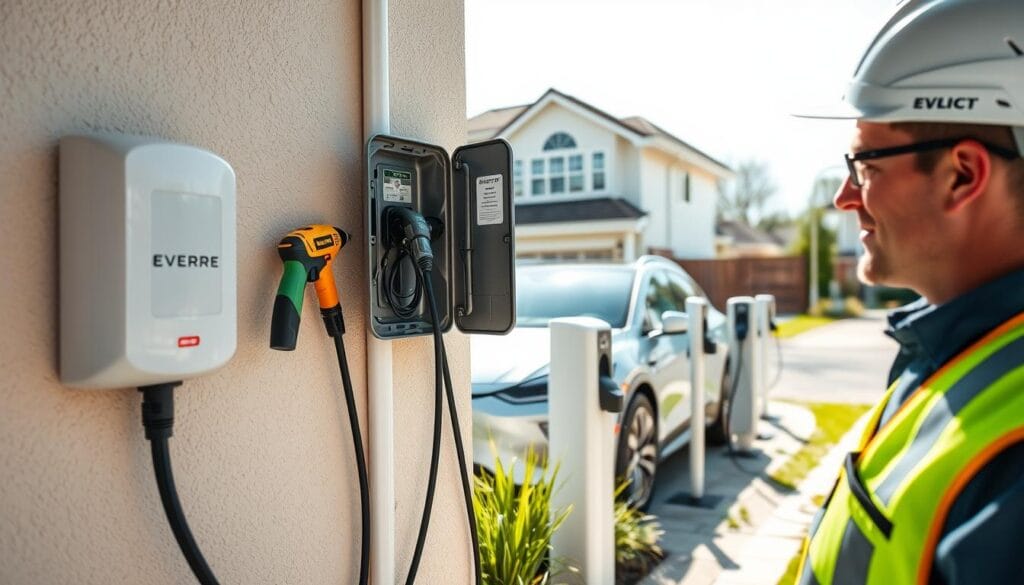
On installation day, the installer comes ready with all tools. They connect the charger to your electrical system and test it. Mobile EV installers usually have everything needed, so your day isn’t disrupted.
The installer’s knowledge is key. They set up the charger to meet your needs and follow local rules.
Post-Installation Follow-Up
After the job is done, the installer checks everything. They make sure it works right and teach you how to use it. They also show you how to keep it in good shape.
Choosing a trusted installer means a smooth EV charging experience. You’ll know your system was set up right and safely.
Preparing Your Home for Installation
Getting your home ready for an EV charger involves several steps. Proper preparation ensures a smooth installation process.
Necessary Electrical Upgrades
Before installing an EV charger, check your home’s electrical system. If your electrical panel is outdated or lacks capacity, you might need to upgrade it. This could mean installing a new circuit for your EV charger. The cost of these upgrades varies but is crucial for safe and efficient charging.
Key Considerations for Electrical Upgrades:
- Assess your current electrical panel’s capacity
- Determine if a new dedicated circuit is required
- Consider hiring a licensed electrician for the upgrade
| Electrical Upgrade | Average Cost | Importance |
|---|---|---|
| Panel Upgrade | $1,000 – $3,000 | High |
| Dedicated Circuit | $500 – $1,500 | High |
| GFCI Outlet Installation | $200 – $500 | Medium |
Optimizing Charger Location
The charger’s location greatly affects its convenience and functionality. Choose a spot close to where you park, easy to access, and consider cable management. Ideally, the charger should be installed near where you park your vehicle.
Permitting and Approvals
You might need permits or approvals for EV charger installation, depending on where you live. Check with local authorities for specific requirements. This process can take time and cost money, so plan for it.
Permitting Process:
- Contact your local building department to inquire about necessary permits
- Submit an application and provide required documentation
- Schedule an inspection if required
Understanding the ev charger installation cost estimation is key. Costs include labor, materials, and potential electrical upgrades. Get quotes from different installers to compare prices and services.
Maintenance and Troubleshooting Tips
Keeping your EV charger in top shape is key for safe and efficient use. Regular care extends the charger’s life and keeps it working well.
Regular Maintenance Practices
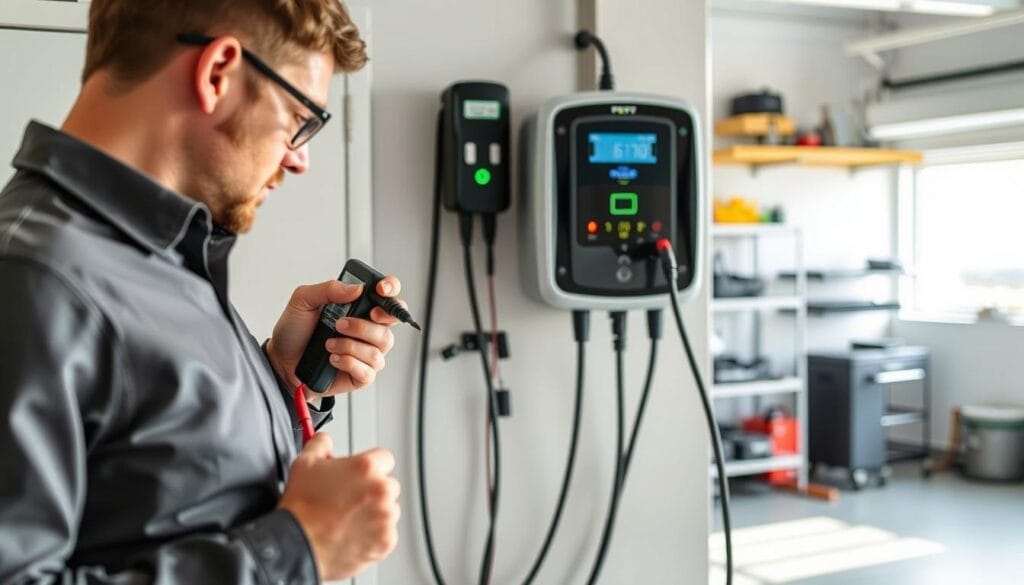
Check your EV charger’s wiring and connections often. An electrician might recommend an annual check to catch issues early.
Key maintenance tasks include:
- Look for wear or damage on the charger and parts
- Make sure the charger is clean and free of debris
- Check that all connections are tight
Common Issues to Look Out For
Knowing common problems helps you fix your EV charger. Issues like faulty wiring, damaged charging cables, or software bugs in smart chargers are common.
| Issue | Symptoms | Potential Solution |
|---|---|---|
| Faulty Wiring | Intermittent charging, burning smell | Inspect and replace damaged wiring |
| Charging Cable Issues | Cable damage, charging interruptions | Replace the charging cable |
| Software Glitches | Charger not responding, error messages | Restart the charger, update software |
When to Call a Professional
If you face complex issues or aren’t sure how to fix them, get help from a pro. Certified electricians with EV charger experience can offer expert help.
Remember, safety is always the first thing when working with electrical systems.
Future Considerations for EV Charging
The future of EV charging is changing fast. New tech is coming out to make charging better. When you get a residential EV charger, think about these new things to keep your system working well.
Upgrading Your Charger
Technology keeps getting better, and you might need a new EV charger. Choose a charger that can be updated to save money and time. Look for one with parts you can easily swap out or update.
- Find chargers that can get better with software updates.
- Go for a charger with a good warranty for future updates.
- Make sure your charger works with new EV models.
Smart Charging Options
Smart charging is changing how we charge our EVs. It lets you charge when it’s best for the grid and saves money. Smart charging can cut your energy bills by charging when it’s cheaper.
Smart charging has many benefits:
- It helps the grid during busy times.
- It saves you money by charging at the right times.
- You can control your charging with apps.
Energy Management Systems
Energy management systems (EMS) are key for better EV charging. An EMS watches and controls your energy use. It makes sure your EV charging fits with your energy needs.
Good EMS features include:
- It shows your energy use in real-time.
- It charges your EV when energy is available.
- It works with green energy like solar or wind.
Thinking about these EV charging future ideas helps you make smart choices. This way, your electric car charging stations and EV charger will stay useful and efficient for a long time.
The Environmental Impact of EV Charging
Choosing to install an EV charger is a smart move for your car’s future and the planet. As electric vehicles become more common, it’s important to know how EV charging affects the environment.
Reducing Carbon Footprint
One big plus of EV charging is cutting down on carbon emissions. By using an electric car and charging it at home or a professional site, you use less fossil fuel. This helps reduce greenhouse gases.
To cut down on carbon emissions even more:
- Use renewable energy to power your EV charger.
- Choose professional ev charger installation for better energy use.
- Keep your EV and charger in good shape to avoid wasting energy.
Supporting Renewable Energy Projects
Many ev charger installation companies let you link your charger to renewable energy projects. This could be buying renewable energy credits or using solar or wind power.
Helping these projects cuts your carbon footprint and boosts renewable energy. Ask your installer about renewable energy options for your charger.
The Role of Home Charging in Sustainability
Charging at home is key to making EVs sustainable. It lets you use renewable energy and control your energy use better.
To make it even greener:
- Charge during off-peak hours to ease grid pressure.
- Get a smart charger that uses energy wisely based on your provider’s green energy.
- Upgrade to a newer, more efficient EV charger as they come out.
By choosing wisely for your EV charging, you help create a greener future. Work with trusted ev charger installation companies for a solution that’s good for you and the planet.
Conclusion: Making an Informed Choice
Choosing the right person to install your EV charger is key. You need to do your homework, check their credentials, and talk clearly to make sure it goes smoothly.
You know now how important it is to pick a good installer. Look at their experience, what others say about them, and their prices. This is true when you’re looking for “mobile EV installers” or trying to figure out “EV charger installation cost estimation.”
Key Considerations
Think about getting a local installer. They know the area well, can meet local rules, and might even offer better prices.
Trust Your Instincts
Trust your gut when picking an installer. A good one will help you from start to finish. They’ll make sure everything goes well.
Choosing the right installer means you can charge your car at home. It also shows you care about the planet.