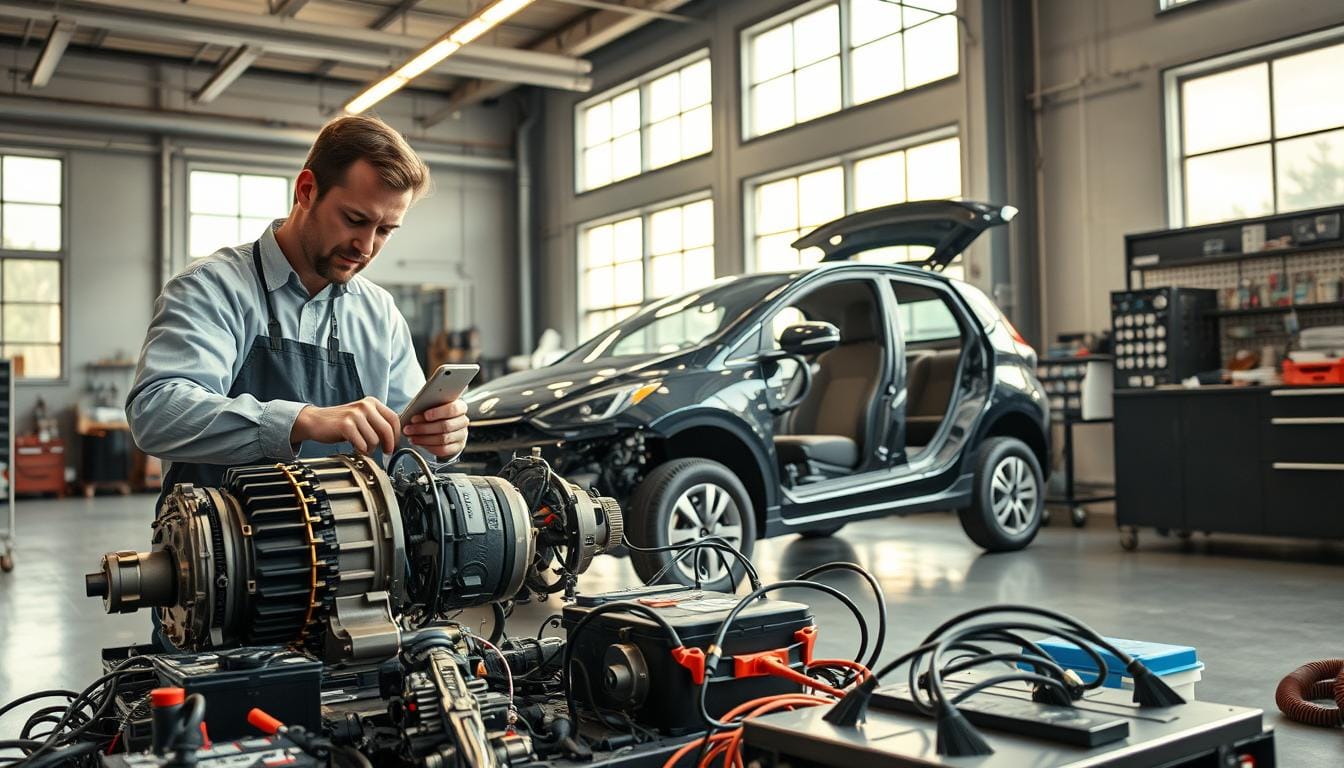
Electric Vehicle Conversion Kit Cost: Is It Worth It in 2025?
Elon Musk once said, “The earth has enough resources for our need, but not enough for our greed.” This quote highlights the need for sustainable transport, like electric vehicle conversions.
Are you thinking of joining the green movement? But is it a smart choice? Converting a gas-powered car to electric power can cost a lot. This cost depends on the car type and how fast you want it to go.
The cost can be between $34,000 and over $75,000. This depends on if you get a pro to do it or do it yourself. Knowing what affects the price is key when deciding.
Table of Contents
Understanding Electric Vehicle Conversion Kits
Electric vehicle conversion kits are a great option for those wanting to switch to electric cars. If you’re thinking about going electric, it’s important to know what these kits are and how they work.
What is an Electric Vehicle Conversion Kit?
An electric vehicle conversion kit is a set of parts that replace a car’s gas engine with an electric motor and battery. The main parts include:
- Electric motor
- Battery pack
- Controller
- Inverter
These parts turn your car into an electric one. It’s a green and possibly cheaper option than gas cars.
How Do Conversion Kits Work?
Converting a car to electric involves swapping the gas engine for an electric motor and adding a battery pack. You also need a controller and inverter. The motor powers the car, the battery holds the energy, and the controller and inverter manage it.
Here’s a quick look at the conversion process and key parts:
| Component | Function |
|---|---|
| Electric Motor | Provides power to propel the vehicle |
| Battery Pack | Stores energy for the electric motor |
| Controller | Manages energy flow between battery and motor |
| Inverter | Converts DC power to AC power for the motor |
When looking at an affordable electric vehicle conversion, check the kit’s quality and if it fits your car. Also, consider the electric car conversion kit price. Prices vary based on the kit’s quality, your car’s make and model, and whether you do it yourself or get a pro.
Factors Influencing Conversion Kit Costs
Turning your car into an electric one has several costs to consider. The price of a DIY electric vehicle conversion kit can change a lot. This is because of a few key things.
Type of Vehicle
The car you have affects how much you’ll pay for the conversion. Smaller cars are cheaper to convert than big SUVs or trucks. This is because they need less powerful motors and smaller batteries.
Kit Quality and Features
The quality and features of the kit also play a big part in the cost. Kits with better batteries and motors cost more. You need to think about what you need and how much you can spend.
Some important parts that affect the kit’s quality and price are:
- Battery type and capacity
- Motor power and efficiency
- Charging system capabilities
- Control systems and instrumentation
Labor vs. DIY Installation
Whether you do the installation yourself or get a pro also affects the cost. DIY installation can save money but needs technical skills and tools. Professional installation makes sure it’s done right but costs more.
When choosing between DIY and a pro, think about your skills, the kit’s complexity, and the risks.
Breakdown of Average Conversion Kit Costs
The cost of electric vehicle conversion kits varies a lot. Knowing these costs is key to planning your budget and making a smart choice.
The Tesla Swap Package is a top pick for 2025, starting at $24,000. It’s known for being reliable and having all you need, making it a favorite among car owners.
The Revolt Systems Crate Motor Kits cost between $49,190 and $67,990. They’re customizable and packed with the latest tech, which explains their higher price.
The NetGain Hyper 9 Integrated Systems have a different pricing. Costs change based on your car’s weight and battery size. This means you can get a kit that fits your car’s needs, possibly saving money.
Several things influence the cost of conversion kits:
- Type of Vehicle: Your car’s make and model can greatly affect the kit’s price.
- Kit Quality and Features: Kits with more features and better quality cost more.
- Labor vs. DIY Installation: Whether you hire a pro or do it yourself also impacts the price.
Here’s a quick look at what you might expect to pay for these kits:
| Conversion Kit | Price Range |
|---|---|
| Tesla Swap Package | $24,000+ |
| Revolt Systems Crate Motor Kits | $49,190 – $67,990 |
| NetGain Hyper 9 Integrated Systems | Variable (dependent on vehicle specifications) |
Knowing these costs and factors will help you choose the right electric vehicle conversion.
Installation Costs and Considerations
Turning your vehicle electric is more than buying a kit. You also need to think about installation costs. The price can change a lot, depending on if you hire a pro or do it yourself.
Professional Installation Expenses
Hiring a pro can make your total cost go up. The price for labor can range from $20,000 to $45,000 or more. It’s important to pick a good installer to do the job right and safely.
When picking a pro, look at their experience, work quality, and warranty. Also, check what others say about them.
Here’s a rough idea of what professional installation might cost:
| Service | Low-End Estimate | High-End Estimate |
|---|---|---|
| Labor Costs | $20,000 | $45,000+ |
| Additional Parts/Modifications | $1,000 | $5,000 |
| Total Estimated Cost | $21,000 | $50,000+ |
DIY Installation Tips
If you’re good with mechanical stuff and have the right skills, doing it yourself can save money. But, remember, it’s not without risks and challenges.
To do it yourself, here are some tips:
- Learn everything you can about the conversion and the kit
- Make sure you have the right tools and a good workspace
- Look for help online and in forums
- Get advice from people who have done it before
By thinking about your options and picking the right supplier and installer, you can have a successful electric vehicle conversion. It will meet your needs and fit your budget.
Comparing Costs: Buying vs. Converting
Choosing between buying a new electric vehicle or converting your current one is a big decision. It depends on your budget, the type of vehicle you have or want, and how much you expect to save in the long run.
Initial Purchase Price of Electric Vehicles
Buying a new electric vehicle can cost a lot upfront. Prices range from $25,000 to $40,000, based on the model and features. For example, a Tesla Model 3 starts at about $35,000, and a Nissan Leaf at around $29,000.
Converting your car to electric costs less at first. You’ll need to buy a conversion kit, which can cost between $3,000 to $15,000. The price depends on the kit’s quality and how well it fits your car.
Long-term Savings from Conversion
Even though new EVs are pricier, converting your car can save you money over time. EVs use less fuel, which is cheaper than gasoline. They also need less maintenance, saving you money on repairs and upkeep.
Here’s a look at the potential savings:
| Cost Category | Buying a New EV | Converting Your Existing Vehicle |
|---|---|---|
| Initial Cost | $25,000 – $40,000 | $3,000 – $15,000 (kit) + labor |
| Fuel Costs (5 years) | $1,500 – $3,000 | $1,500 – $3,000 |
| Maintenance Costs (5 years) | $1,000 – $2,000 | $1,000 – $2,000 |
| Total Cost of Ownership (5 years) | $27,500 – $45,000 | $5,500 – $20,000 + labor |
The table shows converting your car can save you money in the long run, if you already have a good vehicle. But, the total cost depends on many things, like the vehicle, conversion kit, and local incentives.
In summary, while new EVs have their perks, converting your car is a cost-effective option for long-term savings. It’s key to think about the conversion kit cost, installation, and savings on fuel and maintenance.
Financial Incentives for Conversion
Thinking about making your car electric? Government incentives can help a lot. Many places offer rebates, tax credits, and fee exemptions for electric car conversions.
Federal and State Incentives
In the U.S., both the federal and state governments give incentives for electric cars. These can help pay for an electric vehicle conversion kit. For example, some states give rebates from $500 to $5,000, based on your income and conversion details.
Key Federal and State Incentives:
- Federal Tax Credits: Up to $7,500 for electric vehicle purchases, including conversions.
- State Rebates: Varying amounts, often between $1,000 and $5,000.
- Exemptions: Some states offer exemptions from sales tax, registration fees, or other charges.
Rebates and Tax Credits
Rebates and tax credits make electric car conversions cheaper. A rebate can lower the kit’s cost. A tax credit can reduce your taxes, saving you money.
Examples of Rebates and Tax Credits:
- The California Clean Vehicle Rebate Project offers rebates up to $5,000 for eligible electric vehicle conversions.
- The Federal Electric Vehicle Tax Credit can provide up to $7,500 in tax credits for qualified conversions.
To save the most, check the incentives in your state and know what you qualify for.
Using these financial incentives can make your electric car conversion more affordable. You’ll also enjoy the benefits of driving electric in the long run.
Typical Timeline for Vehicle Conversion
Thinking about turning your car into an electric one? Knowing the timeline is key for a smooth change. The process includes planning, preparation, and installing the electric kit.
Planning and Preparation
The first step is planning and getting ready. This stage is vital as it checks if your car can be converted and what kit you need. You must look at your car’s make, model, and age to see if it fits.
Finding good electric vehicle conversion kit suppliers is also important. This ensures you get a quality kit that suits your needs.
Next, you should plan your budget. This includes the kit’s cost and any electric vehicle conversion kit installation cost. You might also need to get documents ready and talk to experts.
| Activity | Estimated Time |
|---|---|
| Researching conversion feasibility | 1-2 weeks |
| Selecting a conversion kit | 1 week |
| Budgeting and financial planning | 1-2 weeks |
Installation Duration
The kit installation is the longest part. It depends on the conversion’s complexity, part availability, and if you’re doing it yourself or hiring someone. It usually takes a few weeks to a couple of months.
Things that affect the time include the car type, kit complexity, and the installer’s skill. Having all parts and tools ready can make it faster.
- Simple conversions: 2-4 weeks
- Complex conversions: 6-8 weeks or more
Knowing these timelines helps you plan better. It ensures a smooth switch to electric power.
Performance and Range Considerations
When you think about turning your car into an electric one, think about how it changes how your car drives and how far it can go. Electric cars usually go faster and feel more responsive, making them better to drive.
Impact on Vehicle Performance
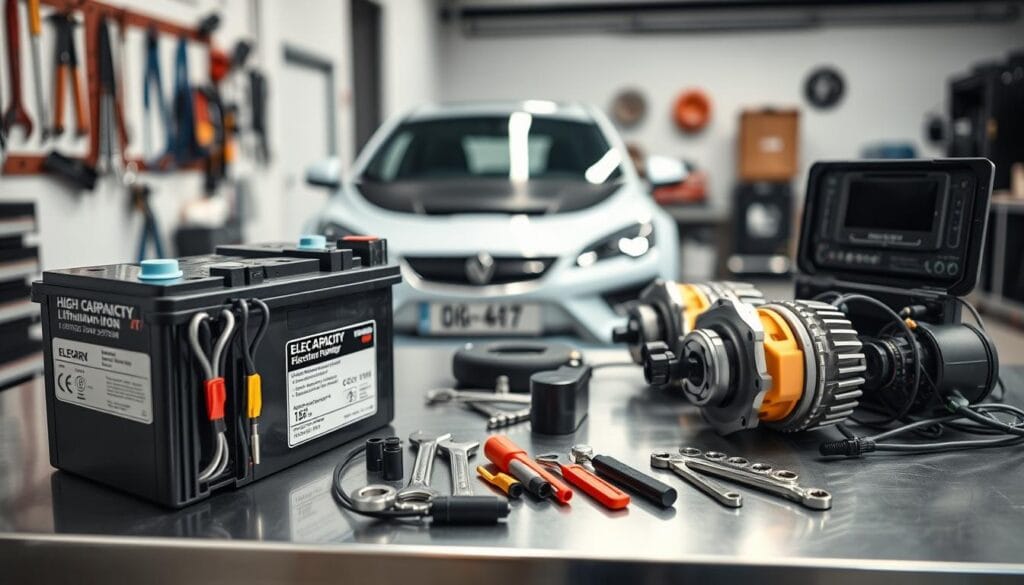
The electric vehicle conversion kit components play a big role in how your car performs. A good kit can make your car go faster and feel more powerful.
Several things affect how well your car will perform:
- The power of the electric motor
- The size and type of the battery pack
- The car’s weight after the conversion
For example, a kit with a strong motor and balanced batteries can make your car go faster and feel more agile.
Expected Range After Conversion
The distance your car can go after being converted depends on a few things. These include the battery pack’s size, the car’s weight, and how you drive. A best electric car conversion kit usually comes with a battery pack that’s good for both range and power.
To get the most out of your car’s range, consider these tips:
- Pick a kit with a battery pack that fits your driving style.
- Make sure your car’s weight is evenly distributed for better efficiency.
- Drive smoothly, using gentle acceleration and braking to save energy.
By understanding these points and picking the right kit, you can have a car that’s not only fast but also goes far enough for your daily trips.
Environmental Impact of Conversion
Choosing to convert your vehicle to electric is a green choice. It can greatly reduce the harm your daily drive does to the environment. Knowing how this change helps the planet is key.
Switching to electric power cuts down your car’s carbon footprint. This is even more true when you use clean energy. It’s a step towards a greener way to get around, helping the world breathe easier.
Reducing Carbon Footprint
One big plus of electric car conversion is less carbon in the air. Moving from gas to electric means using less oil. This lowers the emissions your car makes.
- Lower Emissions: Electric cars don’t pollute the air like gas cars do, making cities cleaner.
- Renewable Energy Integration: Using solar or wind power makes electric cars even greener over time.
- Energy Efficiency: Electric cars use more of the energy they get from the grid than gas cars do.
Contribution to Sustainable Transportation
Electric car conversion helps make transportation cleaner. It encourages using cleaner energy and less oil. This move is part of a bigger push towards green travel.
“The transportation sector is one of the largest contributors to greenhouse gas emissions. Transitioning to electric vehicles is a critical step towards mitigating this impact.”
An electric vehicle conversion cost calculator can show if it’s worth it. Looking for affordable electric vehicle conversion means you can go green without spending too much.
Choosing electric means your car is more efficient and helps the planet. This choice is part of a bigger trend towards greener cars.
Is an Electric Vehicle Conversion Worth It?
Thinking about converting your car to electric involves looking at several things. You need to think about your driving habits, budget, and what you prefer. It’s key to see how these match up with your own situation.
Assessing Your Driving Habits
How you drive every day is crucial when deciding on an electric car conversion. If you drive short distances or mostly in the city, it might work for you. Think about the cost of the conversion kit and if it fits your budget.
Long-term Value Analysis
Looking at the long-term benefits of going electric is important. Compare the cost of the conversion kit to what you’ll save on fuel and car upkeep. This will show if converting is a smart choice for you.
By carefully looking at your needs and the costs, you can decide if an electric car conversion is right for you.