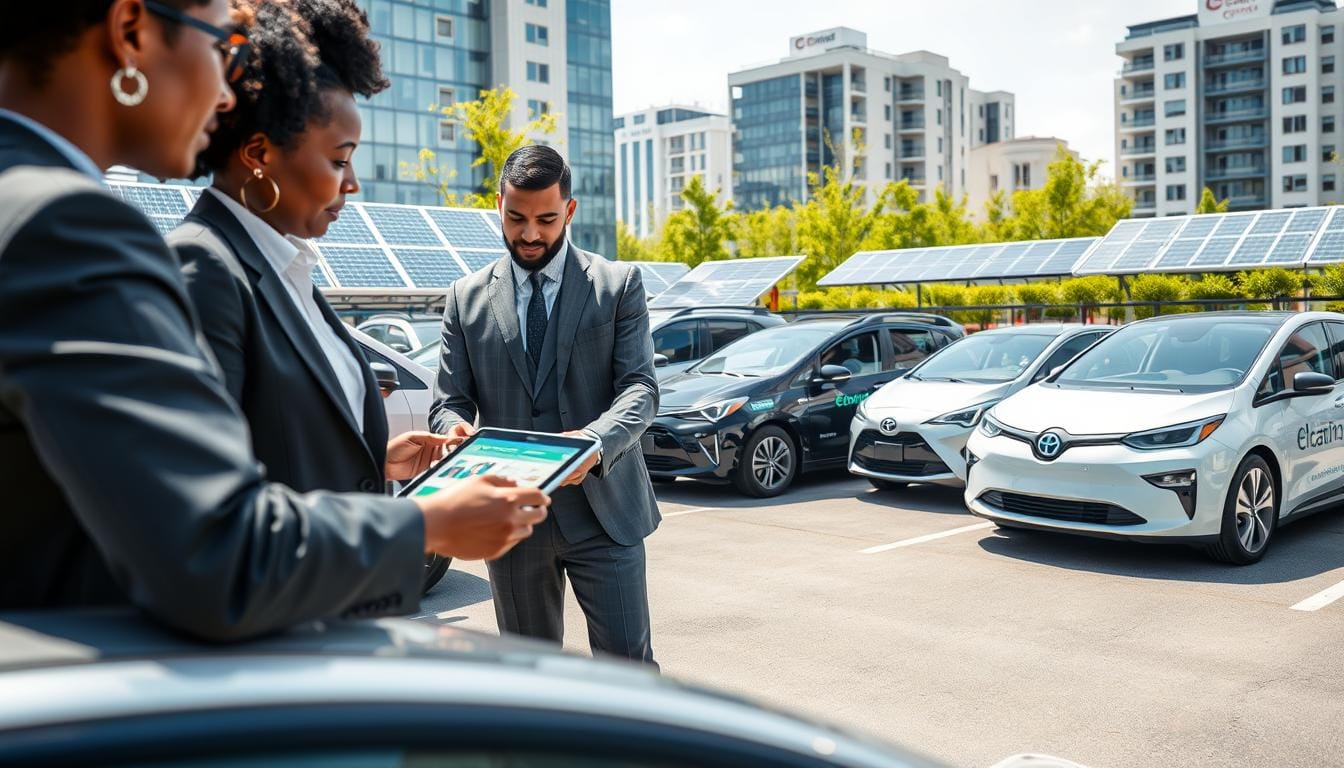
Fleet EV Conversion Company Near Me: What Businesses Should Know
As Elon Musk once said, “The electrification of transportation is going to happen, it’s just a question of how quickly it happens.” Today, 64% of fleet professionals use electric vehicles (EVs). And 87% plan to switch to electric within five years. The change is happening fast.
You might know how important EVs are becoming in transport. As a business owner, you’re looking to switch your vehicles to electric. It’s key to find a good electric vehicle fleet conversion service for a smooth transition.
When looking for a fleet EV conversion company near me, think about the benefits and challenges. Also, learn the best ways to make the switch.
Table of Contents
Understanding EV Conversion
Switching your fleet to electric vehicles can be a big change. It’s important to know what fleet EV conversion means and how it can help your business.
What is Fleet EV Conversion?
Fleet EV conversion means changing your commercial fleet to electric vehicles. You need to check your current fleet, pick the right EVs, and plan the needed infrastructure. A good conversion needs careful planning and execution for a smooth change.
Benefits of Converting to Electric
There are many benefits to going electric. Lower operating costs are a big plus, as EVs are cheaper to run. They also offer improved performance and can make your company look good by showing you care about the environment.
Common Misconceptions About EV Conversion
But, there are myths about EV conversion that need clearing up. Some think it’s too expensive upfront, or they worry about charging. But, with help from a local electric fleet conversion company or hybrid fleet conversion specialists, these worries can be lessened.
Knowing about fleet EV conversion helps businesses make smart choices. This knowledge lets companies enjoy EV benefits while avoiding problems.
Key Factors to Consider When Choosing a Company
When you think about switching your fleet to electric vehicles, picking the right company is key. The right partner makes the transition smooth. The wrong one can cause delays and extra costs.
Experience and Expertise
Choosing a professional EV fleet conversion expert means looking at their experience and skills. You want a company that has worked with fleets like yours before. They should have a team of skilled technicians.
A company with lots of experience can handle any problems that come up. They also keep up with the latest EV conversion tech and methods.
Customer Reviews and Case Studies
Looking at customer reviews and case studies is a great way to see how good a company is. These show if the company can really do what they say.
Search for reviews online and ask the company for examples of their work. This will help you understand their skills and the quality of their work.
Services Offered
A good service package is important for a smooth switch to electric vehicles. Look for a company that offers vehicle selection, charging infrastructure planning, and maintenance support.
The best EV fleet conversion service will not just convert your vehicles. They will also support them with maintenance, troubleshooting, and upgrades as needed.
Environmental Impact of Fleet EV Conversion
Businesses thinking about switching to electric vehicles (EVs) need to know the environmental benefits. Moving to EVs is more than a trend; it’s a smart choice for the planet.
One big plus of EV conversion is the big cut in carbon emissions. By going electric, companies can lower their greenhouse gas output. This helps the environment and makes your company look good for caring about the planet.
Reduction in Carbon Footprint
Switching to electric vehicles can greatly lower CO2 emissions. Electric cars don’t have tailpipe emissions, unlike gas or diesel cars. This means less pollution and cleaner air, which is great for cities.
Key benefits of reduced carbon footprint include:
- Lower greenhouse gas emissions
- Improved air quality
- Enhanced brand reputation
- Compliance with increasingly stringent environmental regulations
Compliance with Environmental Regulations
More and more governments are making rules to fight climate change. By going electric, you meet these rules and avoid fines. Plus, it shows you care about the planet, which is good for your image.
The importance of compliance cannot be overstated. It’s not just about avoiding penalties. It’s about being part of a bigger effort to protect our planet. As a business, you can show that making money and caring for the environment go hand in hand.
To make this happen, team up with a top electric vehicle conversion company or a nearby EV fleet conversion service. They can help you switch smoothly and efficiently.
Cost Analysis of Fleet EV Conversion
For businesses thinking about switching to electric vehicles, a detailed cost analysis is key. It helps you grasp the financial side and make a smart choice.
Initial Investment vs. Long-Term Savings
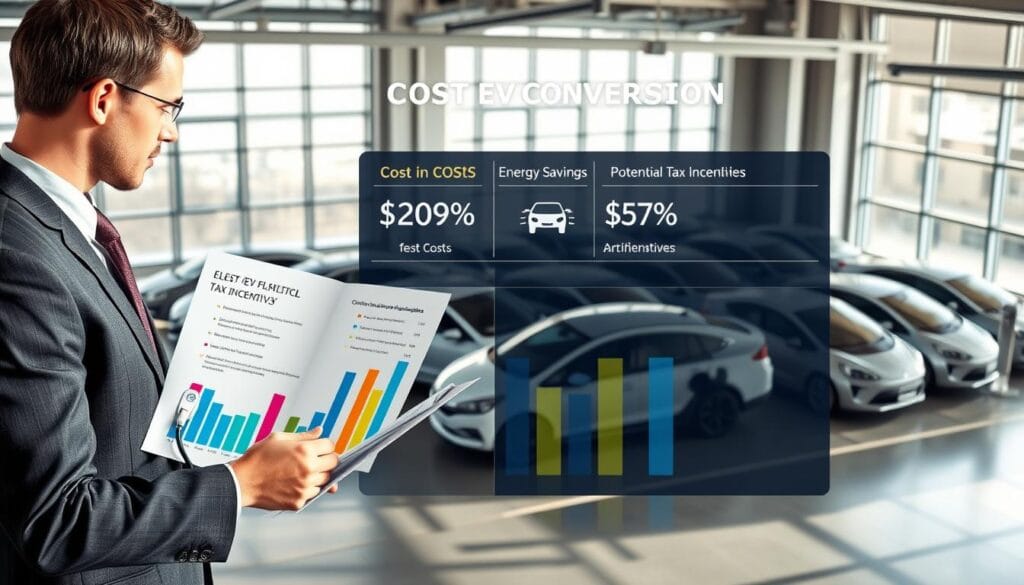
The upfront cost of EV conversion might look high, but the long-term benefits are big. You’ll save on fuel since electricity is often cheaper. Plus, EVs need less upkeep, cutting down on costs.
Here are some areas where you can save:
- Fuel Costs: Electricity is usually cheaper than diesel or gas, saving you a lot on fuel.
- Maintenance Costs: EVs have fewer parts and no need for oil changes, lowering maintenance costs.
- Reduced Downtime: With less maintenance, your vehicles will be on the road more, boosting productivity.
Incentives for EV Conversion
There are also incentives for businesses going electric. These can help cover some of the initial costs.
Some incentives you might get include:
- Federal Tax Credits: The U.S. government offers tax credits for electric vehicle investments.
- State and Local Incentives: Many places offer rebates, grants, or fee exemptions for electric vehicles.
- Utility Company Incentives: Some utilities have special rates or rebates for charging EVs during off-peak hours.
To get the most savings, it’s important to look into and use these incentives for your fleet conversion.
Available Technologies in EV Conversion
The world of EV conversion is changing fast. New tech in batteries, charging, and fleet software is key. If you’re converting your fleet to electric, knowing about these updates is crucial.
Battery Technologies
Batteries are the core of EVs. Today’s batteries hold more energy, last longer, and charge quicker. Lithium-ion batteries lead the way, but solid-state batteries are on the horizon, promising better efficiency and safety.
Here’s a quick look at some battery types:
| Battery Type | Energy Density | Charging Speed | Lifespan |
|---|---|---|---|
| Lithium-ion | High | Fast | Long |
| Solid-State | Very High | Faster | Very Long |
| Lead-Acid | Low | Slow | Short |
Charging Infrastructure Solutions
Reliable charging is vital for electric fleets. Level 2 charging stations are cost-effective and fast. DC Fast Charging can top off batteries in under 30 minutes, perfect for high-mileage fleets.
Software and Fleet Management Tools
Good fleet management is essential for EVs. Advanced software tracks performance, optimizes routes, and schedules charging. Fleet management software also helps with energy use and cost savings.
Using these technologies ensures a smooth EV transition. As a leading provider, it’s key to work with a company that keeps up with these advancements. They should offer services that meet your business needs.
Steps to Get Started with EV Conversion
Starting to convert your fleet to electric vehicles requires careful planning. It’s important to follow a structured approach. This includes assessing your current fleet, figuring out what you need to convert, and making a detailed plan.
Assessing Your Current Fleet
First, you need to understand your current fleet well. Look at the types of vehicles you have, how they’re used, and your current costs. This helps you know which vehicles can be converted and what changes are needed.
Key factors to consider when assessing your fleet include:
- Vehicle types and their usage patterns
- Current operational costs, including fuel and maintenance
- The age and condition of your vehicles
- Any specific requirements for your fleet, such as payload or range needs
Determining Conversion Needs
After understanding your fleet, you need to figure out what you need to convert. Think about the range, payload, and charging needs of your vehicles. Also, check if there are electric vehicle conversion services nearby, like a fleet EV conversion company near me or a local electric fleet conversion company.
Developing a Conversion Plan
Now, create a detailed conversion plan. This plan should cover the steps to convert your fleet, including the timeline, budget, and resources needed. Also, think about any infrastructure upgrades, like installing charging stations, and plan for staff training on the new electric vehicles.
A well-structured conversion plan will:
- Outline the conversion process and timeline
- Establish a budget and identify necessary resources
- Consider infrastructure needs, such as charging stations
- Plan for staff training on the new electric vehicles
Challenges of Fleet EV Conversion
Switching to electric vehicles in your fleet comes with many benefits. Yet, there are challenges to overcome for a successful transition. Knowing these challenges is key to finding solutions.
Range Anxiety and Logistics
Range anxiety is a big worry with electric vehicles. They often can’t go as far as gas cars. Adding to this is the need for good charging spots. Companies must figure out how to charge their vehicles efficiently.
Charging Infrastructure Considerations
- Assessing existing charging infrastructure
- Determining the need for additional charging points
- Integrating charging infrastructure with fleet management systems
Maintenance Considerations
Maintenance is vital for electric vehicles. They need less care than gas cars but still require regular checks. Companies must train their teams to handle EVs’ special needs.
| Maintenance Task | Traditional Vehicles | Electric Vehicles |
|---|---|---|
| Battery Maintenance | Not Applicable | Regular monitoring |
| Software Updates | Less frequent | Regular updates |
| Brake Maintenance | Regular maintenance | Less frequent due to regenerative braking |
Training Your Staff
Training is crucial for a smooth transition to electric vehicles. It’s not just for maintenance teams but also drivers and managers. Good training can help manage range anxiety and prepare staff for EVs.
By tackling these challenges, companies can make a smooth switch to electric vehicles. They can use the help of hybrid fleet conversion specialists and professional EV fleet conversion experts to guide them.
Financing Options for Fleet EV Conversion
Switching to electric vehicles is smart for your wallet and the planet. When you think about making your fleet electric, knowing your financing options is key. It helps you choose wisely, fitting your business needs.

Grants and Tax Credits
Converting to electric vehicles comes with big perks like grants and tax credits. These can cut down the cost of going electric. For example, the U.S. government gives tax breaks for businesses that buy electric cars.
To get the most from these benefits, keep up with government policies. Look for federal, state, and local incentives. A top electric vehicle conversion company can guide you through these options, helping you use all the financial help available.
Leasing vs. Buying
Choosing between leasing or buying electric vehicles for your fleet depends on your business and money situation. Each option has its own benefits.
- Leasing means lower costs upfront and the chance to get new cars often. It’s great for staying current with EV tech without a big commitment.
- Buying electric cars saves money in the long run since you don’t pay lease fees. But, it means a big upfront cost. If you have the money, buying can save you money over time, thanks to grants and tax credits.
Choosing to lease or buy should be a careful decision. Think about your company’s finances, needs, and future plans. Talking to financial advisors and EV experts can help you make the right choice for your business.
Future Trends in Fleet EV Conversions
The future of fleet EV conversions is changing fast. New electric vehicle technologies are leading the way. As a business, keeping up with these changes is key to staying ahead.
Innovations in Electric Vehicle Technologies
New electric vehicle technologies are changing the game. Some big advancements include:
- Improved battery technologies with higher energy density and faster charging
- Enhanced charging infrastructure solutions, like high-power charging stations
- Advanced software and fleet management tools for better performance
A recent report says, “The future of electric vehicles is not just about the vehicles themselves, but also about the ecosystem that supports them.”
“The EV market is expected to grow significantly, driven by declining battery costs and increasing investment in charging infrastructure.”
Emerging Market and Policy Changes
Market trends and policy changes are also influencing fleet EV conversions. Some key trends include:
| Trend | Description | Impact |
|---|---|---|
| Increasing government incentives | Governments are offering incentives to encourage businesses to adopt electric vehicles | Reduced upfront costs for businesses |
| Growing demand for sustainable transportation | Consumers are increasingly demanding sustainable transportation options | Increased pressure on businesses to adopt environmentally friendly practices |
| Expanding charging infrastructure | Investments in charging infrastructure are making it easier for businesses to adopt electric vehicles | Reduced range anxiety and increased adoption rates |
To stay competitive, keep up with these trends and adjust your strategy. By using the latest electric vehicle technologies and responding to market and policy changes, you can make a successful switch to electric vehicles.
Looking for a reliable partner for your fleet EV conversion needs? Consider a nearby EV fleet conversion service or an affordable fleet EV conversion company. They can offer the expertise and support you need.
Success Stories of Fleet EV Conversions
Many leading companies have switched to electric fleets. They share valuable lessons and insights. By looking at these success stories, you can understand the challenges and benefits of EV conversion.
Real-World Examples of EV Conversion
Companies that chose electric fleets have seen big advantages. They’ve cut down on costs and improved the environment. For example, they’ve saved on maintenance and boosted their brand image.
Key Takeaways from Successful Conversions
When looking for a “fleet ev conversion company near me,” consider other businesses‘ experiences. Learning from their successes and setbacks helps you create a better EV conversion plan for your needs.
Using the lessons from these success stories, you can make your EV conversion smoother. This way, you can reach your sustainability goals more easily.