How to Open an EV Charging Station Business
Elon Musk once said, “The future is electric.” The global EV charging station market is expected to hit $103.6 billion by 2028. It’s growing at a rate of 26.4% each year. This shows a big chance for entrepreneurs.
The need for EV charging spots is going up. This is because more people are choosing electric cars.
Starting an electric vehicle charging station startup can be very profitable. But, you need a good plan. A detailed ev charging station business plan is key to doing well.
You can make the most of this growing market. Just know what makes a successful EV charging station business.
Table of Contents
Understanding the EV Market Landscape
The demand for electric vehicles is growing fast. It’s important to understand current trends and future projections for a successful EV charging station business plan. You’ll need to look at many factors that shape the industry’s growth and direction.
An Overview of Electric Vehicle Trends
The electric vehicle market has grown a lot in recent years. This growth is due to environmental concerns, government incentives, and tech advancements. Global EV sales have been going up, with many countries supporting electric vehicle adoption.
Key trends shaping the EV market include:
- More car models are becoming electric, giving consumers more choices.
- Better battery technology is making EVs more appealing to more people.
- There’s a big push to build more charging stations, making EVs easier to use.
“The future of transportation is electric, and we’re committed to making it happen.”
Market Growth Projections
Experts predict a big increase in EV adoption in the next few years. By 2030, global EV sales could hit 26.8 million units, up from 6.6 million in 2021. The Biden administration plans to have 500,000 public charging stations in the US by 2030, supporting this growth.
| Year | Global EV Sales (Million Units) |
|---|---|
| 2021 | 6.6 |
| 2030 | 26.8 |
Key Players in the Charging Station Sector
Knowing the major players in the EV charging station sector is key for your business plan. Big companies are investing in charging infrastructure. You should understand the competitive landscape.
Some of the key players include:
- ChargePoint: One of the largest EV charging networks in the world.
- EVgo: A prominent fast-charging network in the US.
- Shell: Investing heavily in EV charging infrastructure globally.
As you work on your EV charging station business plan, stay up to date with the latest trends, growth projections, and key players. This knowledge will help you make smart decisions and set your business up for success.
Assessing Your Business Model Options
Choosing the right business model is key to your EV charging station’s success. There are many options, each with its own benefits and drawbacks. It’s important to understand these differences to ensure your business thrives.
Different Types of Charging Stations
EV charging stations vary by charging speed and technology. The main types are Level 1 (slow charging), Level 2 (fast charging), and DC Fast Charging (rapid charging).
- Level 1 Charging: Uses a standard 120V outlet, perfect for homes.
- Level 2 Charging: Needs a 240V charging station, found in commercial and public spots.
- DC Fast Charging: Charges an EV to 80% in under 30 minutes, usually by highways.
Ownership Structures: Franchises vs. Independents
You can run your EV charging station as a franchise or an independent business. Each has its own pros and cons.
- Franchise Model: Offers brand recognition and support but has franchise fees and less control.
- Independent Model: Gives you full control but requires more work in marketing and building your brand.
When picking an ownership structure, think about your business goals, finances, and management style. Choose the model that fits your needs best.
Identifying Ideal Locations for Your Station
Finding the right spot for your EV charging stations is key to your business’s success. You need to think about several things. These include where people are likely to need a charge and how easy it is to get there.
High-Demand Areas: Where to Set Up
Places with lots of people are great for EV charging stations. Think about shopping centers, office buildings, and residential complexes. Putting your station in these spots means you’ll get lots of customers.
Look at the area’s setup and if people are starting to use electric cars more. Places with lots of EV owners are usually the best choice.
Assessing Local Infrastructure and Traffic Patterns
It’s important to know about the local roads and how much traffic there is. Look at the road networks, traffic volume, and proximity to amenities. This helps you see if your station will be easy to find and use.
- Check how close you are to big roads.
- Look at the traffic to make sure your station is seen by many.
- Think about what’s nearby, like restaurants or shops, to make your station more appealing.
By looking at these things, you can pick the best places for your EV charging stations. This will help your business do well.
Navigating Legal and Regulatory Requirements
Before starting your EV charging station, you must understand the legal rules. These rules help you operate your business legally. They cover many aspects of your business.
Permits and Licenses Needed
You’ll need several permits and licenses to run an EV charging station. These include business licenses, electrical permits, and zoning permits. Having the right documents is key to avoid fines and keep your business running smoothly.
The type of charging station you have affects the permits you need. For example, fast-charging stations might need extra electrical permits. Always check with local authorities to know what permits you need.
- Business License: This license lets you legally operate your business in a certain area.
- Electrical Permit: This is needed for the charging equipment to meet safety and electrical codes.
- Zoning Permit: This ensures your station meets local zoning laws, where you can locate your business.
Zoning Laws and Their Implications
Zoning laws are important for where you can put your EV charging station. They help control land use. Following these laws is vital to avoid legal problems and keep your business open.
To understand zoning laws, you should research local rules. You might also need to talk to a legal expert. Some places offer special benefits for EV charging stations, like easier permits or tax breaks.
| Zoning Classification | Implications for EV Charging Stations | Potential Incentives |
|---|---|---|
| Commercial Zone | Generally more permissive, allowing for easier establishment of charging stations. | Tax breaks, reduced permitting fees |
| Residential Zone | May have restrictions, requiring special permits or variances. | Potential for community development grants |
| Industrial Zone | Often less restrictive, but may require environmental assessments. | Economic development incentives |
By following the legal and regulatory rules, you can run your EV charging station smoothly. This helps you avoid legal issues and builds a reputable business. It also supports the growth of electric vehicles.
Securing Funding for Your EV Charging Station
Getting the right funding is key to starting a successful EV charging station business. The initial investment can be big. Knowing the different financing options can help a lot.
Exploring Grants and Incentives
Government grants and incentives are big helpers in building EV charging stations. They can cut down the costs of starting a station a lot.
- Federal and state grants for renewable energy projects
- Utility company rebates for installing charging points
- Tax credits for investments in EV charging infrastructure
In the United States, the Alternative Fuel Infrastructure Tax Credit can cover up to 30% of the cost of installing EV charging stations.
Traditional Funding Sources: Loans and Investors
Grants and incentives aren’t the only ways to fund EV charging stations. Loans and investors are also important.
| Funding Source | Description | Benefits |
|---|---|---|
| Bank Loans | Traditional financing through banks and financial institutions | Access to large sums of capital, flexible repayment terms |
| Private Investors | Investors looking for opportunities in the EV sector | Potential for significant investment, strategic partnerships |
| Green Bonds | Bonds issued for environmentally friendly projects | Lower interest rates, attractive to environmentally conscious investors |
When looking at these funding options, having a detailed business plan is crucial. It should show how your project will work and how it will make money.
Choosing the Right Equipment and Technology
Setting up a successful EV charging station starts with the right equipment and technology. The chargers you choose greatly affect how users experience your station and its efficiency.
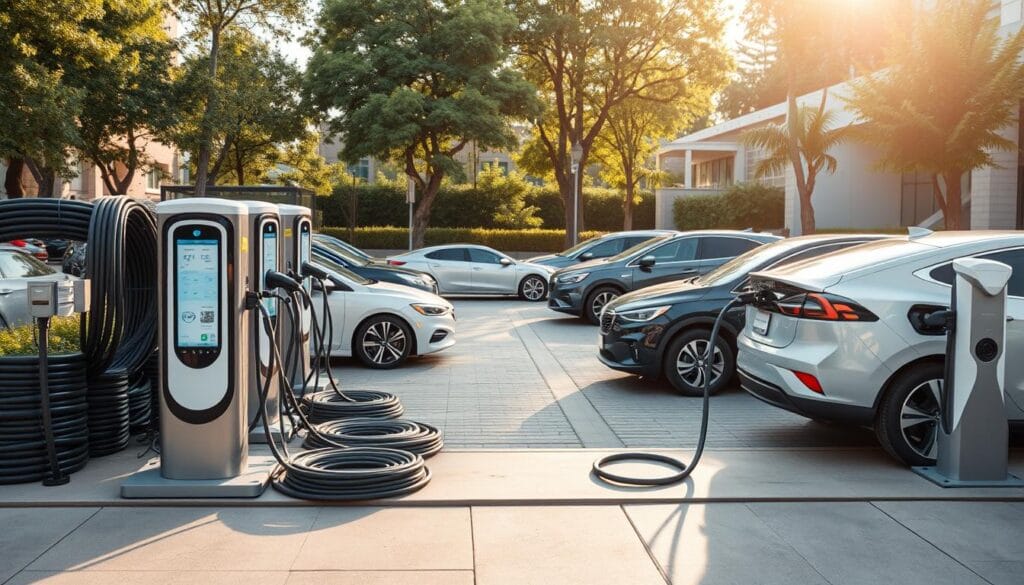
Types of Chargers: Fast vs. Standard
There are mainly two charger types: Level 2 and DC fast chargers. Level 2 chargers are great for places where cars stay for a long time, like malls or offices. They charge at a moderate speed, perfect for spots where people spend more time.
DC fast chargers are for quick charging and fit best in busy spots like highways. They can fill an EV to 80% in less than 30 minutes, ideal for drivers in a hurry.
Reliable Suppliers and Manufacturers
After picking your chargers, finding reliable suppliers and manufacturers is key. Brands like Tesla, ChargePoint, and ABB are leaders in quality and support.
Look for suppliers with good products, warranties, customer service, and compatibility with your setup. Durable equipment and strong support can prevent future problems.
- Research the supplier’s reputation and customer reviews.
- Evaluate the warranty and maintenance services offered.
- Assess the compatibility of the equipment with your station’s requirements.
Creating a Sustainable Business Plan
A good business plan is crucial for success in the EV charging station market. It acts as a guide, helping you make decisions that lead to long-term success and profits.
Key Components of Your Business Plan
Your plan should have key parts. First, a deep market analysis is needed. It helps you understand the demand for EV charging in your area and who your customers are. You also need to know who your competitors are.
Next, you should outline your revenue streams. This includes money from charging, ads, or data analytics. Don’t forget to detail your marketing strategies to draw in and keep customers.
Financial Projections and Budgeting
Creating accurate financial projections is key to getting funding and making smart business choices. Your projections should include income statements, cash flow statements, and balance sheets for the next three to five years.
Budgeting is also vital for managing costs and keeping your EV charging station profitable. You need to plan for initial costs, ongoing expenses, and expected income.
| Budget Category | Initial Investment | Ongoing Expenses |
|---|---|---|
| Equipment Costs | $100,000 | $5,000/year |
| Installation Costs | $50,000 | $0 |
| Marketing Expenses | $20,000 | $10,000/year |
With a detailed business plan that includes financial projections and budgeting, you can make your EV charging station business sustainable and profitable.
Developing Partnerships and Collaborations
Partnerships and collaborations are key to a successful EV charging station business. When starting your electric car charging business, teaming up with different groups can really help. It makes your operations better.
One big plus of partnerships is saving money. Working with local governments can get you incentives and subsidies. These can help pay for your EV charging station. Many governments give grants to businesses that help with green projects.
Working with Local Governments
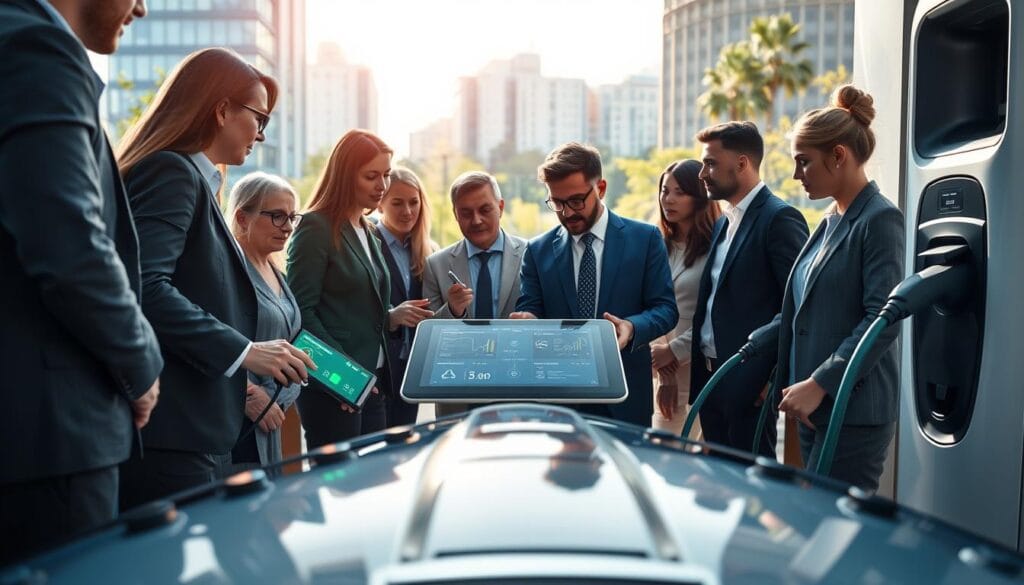
Local governments are very important for EV charging businesses. They can give permits, help with zoning, and offer financial help. Building a strong relationship with local authorities makes setting up your station easier.
Local governments can also help promote your business. They can use their networks to make your business more visible. This can bring in more customers. As experts say, “Government support is key for EV charging to grow.”
“The collaboration between businesses and local governments is essential for creating a sustainable EV ecosystem.” –
Collaborations with Businesses and Brands
Working with businesses and brands is also good. For example, teaming up with popular retail brands can put your charging stations in busy spots. This draws in more customers. Utility companies can also help with electricity and infrastructure.
By teaming up with businesses, you can make a network of charging stations. This makes it easy for EV owners to charge up. It improves their experience and grows your business. Identifying the right partners is key; choose businesses that match your values and target audience.
In summary, partnerships and collaborations are smart moves for an EV charging station business. Working with local governments, businesses, and brands can save money, increase visibility, and bring in more customers. This helps your business succeed.
Marketing Your Charging Station Effectively
Marketing an EV charging station needs a good understanding of who you’re trying to reach. You must know your target audience well. Then, you can shape your marketing plans to fit their needs.
Target Audience Identification
Finding your target audience is key. It helps you focus on the people who will likely use your station. Think about:
- Demographics: age, income, and job
- Location: how close they are to your station
- Behavior: how they drive and charge their EVs
Knowing these details lets you create targeted marketing campaigns that speak to your audience.
Digital Marketing Strategies
Digital marketing is a strong way to promote your EV charging station. Some good strategies are:
- Search Engine Optimization (SEO): Make your website easy to find in search results.
- Social Media Marketing: Use platforms like Facebook and Twitter to connect with your audience.
- Email Marketing: Send out emails to subscribers with special offers and services.
Using these digital marketing tactics can boost your visibility. It can also attract more customers. This helps your EV charging station succeed.
Ensuring Maintenance and Customer Support
The success of an EV charging station depends on reliable charging and great customer service. As an owner, keeping your equipment in top shape and supporting your customers well is key.
Regular Maintenance Best Practices
Keeping your charging gear in good condition is essential. Regular checks on units, cables, and payment systems prevent issues. This ensures users have a smooth experience.
- Schedule regular inspections of charging equipment
- Perform software updates and security patches
- Keep charging areas clean and well-maintained
Regular upkeep boosts user satisfaction and extends your equipment’s life.
Customer Service Essentials for Success
Great customer service is crucial for keeping users happy and coming back. Having a quick support system, like a phone line, email, or app, is important. Training your team to be helpful and knowledgeable can make a big difference.
Good customer service can make first-time users into loyal customers, boosting your station’s profits.
- Implement a multi-channel support system
- Train staff on customer service best practices
- Monitor customer feedback and adjust services
By focusing on maintenance and customer support, your EV charging station can thrive in the long run.
Monitoring Industry Trends and Adapting
The EV charging industry is always changing. It’s key to keep up with new tech and what people want. Your business plan should be ready to change with the market to keep doing well.
Staying Ahead of the Curve
Keep up with the latest by checking out what Tesla, ChargePoint, and EVgo are doing. These big names share info on new trends and tech that could affect your business.
Responding to Market Shifts
Understanding what customers like and do is crucial. As more people want EV charging, your business needs to be ready. This might mean adding more charging spots or making your service better.
By keeping an eye on trends and adjusting, your EV charging station can stay ahead. It will keep meeting the needs of EV drivers as they change.