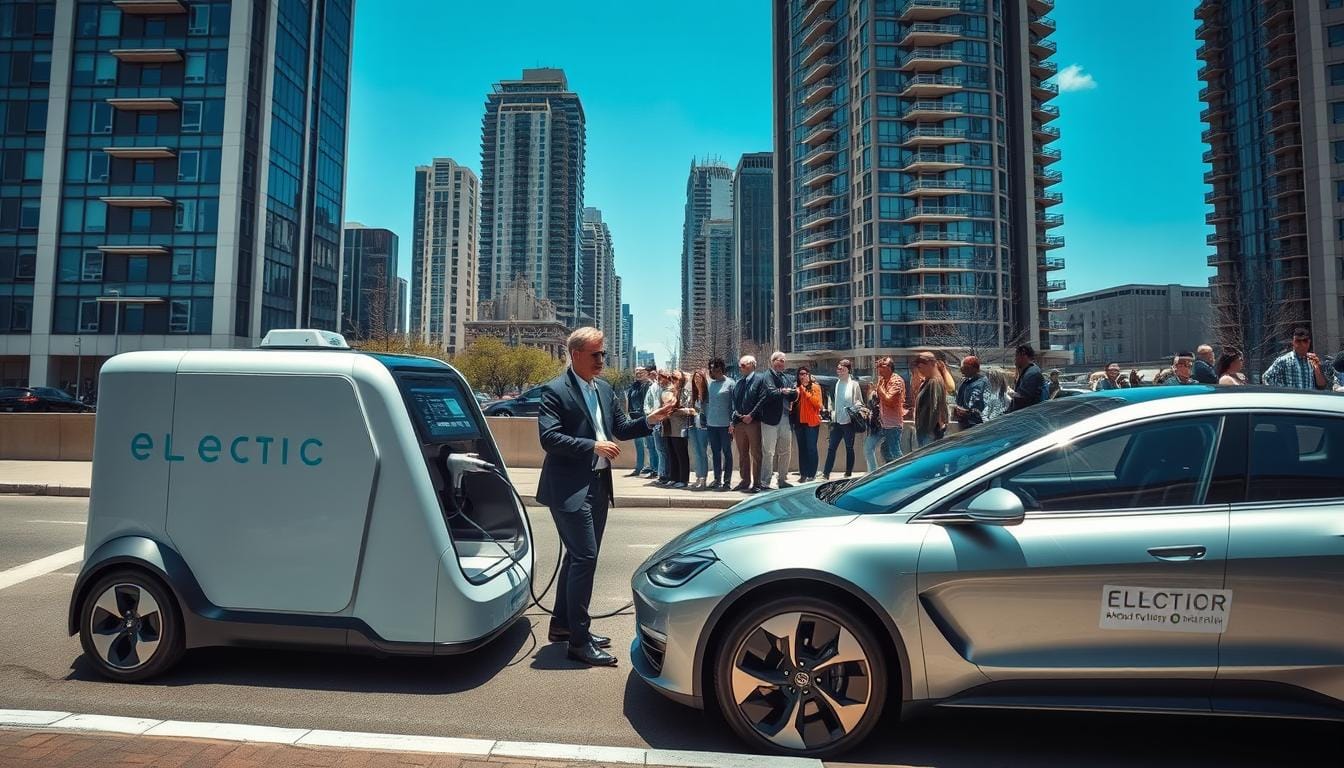
Mobile EV Charger Business Idea: How to Start From Zero
The world is moving towards cleaner energy, and entrepreneurs can make money by offering charging services on the go. “The future of energy is bright, and it’s being written in code, in circuits, and in the rapid adoption of electric vehicles,” shows the need for more charging spots.
You’re on the verge of a profitable chance with an electric vehicle charging startup. The EV charging market is booming, thanks to more people choosing electric cars. Starting a mobile ev charger business idea can be a smart move, helping EV owners stay charged.
Table of Contents
Understanding the Mobile EV Charger Market
The rise of electric vehicles makes the mobile EV charger market key for entrepreneurs. This shift is due to environmental worries, government support, and new tech. It’s a big opportunity for those starting an EV charging business.
Current Market Trends
The electric vehicle market is booming, with sales expected to keep climbing. This means more people want on-the-go EV charging services. The trend is towards easy and accessible charging options.
- More people choose EVs because of the environment and government help.
- There’s a big need for easy and reachable charging solutions.
- EV charging tech is getting better fast.
Growth Potential
The future looks bright for portable electric car charger businesses. As more people buy electric cars, the need for good charging will grow. This is a big chance for businesses to meet this need.
| Year | Projected EV Sales | Demand for Mobile EV Charging |
|---|---|---|
| 2024 | 5 million | High |
| 2025 | 6 million | Very High |
| 2026 | 7 million | Extremely High |
Target Audience Demographics
Knowing who to target is key for your EV charging infrastructure business. EV owners tend to care about the planet, love tech, and live in cities.
- Age: 25-45 years old
- Income: Middle to upper-middle class
- Values: Sustainability, technology, convenience
Essential Equipment for Your Mobile EV Charger Business
Choosing the right equipment is key for your mobile EV charger business to succeed. The right tools boost your service quality and help meet the growing need for electric vehicle charging on the go.
Types of Chargers to Consider
The type of charger you pick greatly affects your business’s efficiency. You’ll need to choose between Level 2 chargers and DC Fast Chargers.
- Level 2 Chargers: These use a 240-volt station and charge an EV in a few hours. They’re great for places where cars stay for a while.
- DC Fast Chargers: They can charge an EV to 80% in under 30 minutes. These are best for busy spots or quick charges.
Necessary Accessories
You’ll also need various accessories for your mobile EV charger business. These include:
- Cables and Connectors: Make sure you have different cables and connectors for various EV models.
- Payment Processing Units: You’ll need secure payment units for transactions.
- Storage Solutions: Good storage for your gear is key for keeping things organized and secure.
Vehicle Requirements
The vehicle for your mobile EV charger business is as important as the chargers. Think about these:
- Vehicle Type: A van or truck is best because they have lots of space for your gear.
- Capacity and Customization: Make sure the vehicle has enough room for your equipment. Also, think about customizations to make your work more efficient.
By picking the right equipment for your mobile EV charger business, you can offer better services. This will improve your efficiency and help you make more money.
Creating a Business Plan for Your Mobile EV Charger Service
To make your electric vehicle charging startup a success, you need a detailed business plan. This plan acts as a roadmap, guiding your decisions and securing funding.
Your business plan should cover several key areas. It will help you define your business model, make financial projections, and create a marketing strategy.
Defining Your Business Model
Your business model is the core of your sustainable EV charger business. You must decide how you will make money. Options include charging per use, subscriptions, or partnerships with local businesses.
Think about your target audience and their needs when choosing a model. For example, charging per use might work for those who don’t use their EV often. But, a subscription could be better for those who use it a lot.
Financial Projections and Budgeting
Financial projections are key to understanding your business’s growth and profit potential. You should forecast your income, expenses, and profits over three to five years.
Budgeting is also essential. It helps you manage your resources. You need to plan for equipment, marketing, and operational costs. A good budget keeps your business financially stable.
Marketing Strategy
A solid marketing strategy is crucial for attracting and keeping customers. You must find what makes your service unique and use it to stand out.
Your marketing plan could include online ads, local ads, and partnerships. For instance, offering discounts at local businesses can benefit both you and your customers.
With a thorough business plan, you’ll be ready to face the electric vehicle charging market’s challenges. You’ll be on your way to a successful mobile EV charger service.
Legal Requirements and Regulations
Starting a mobile EV charger service means you must follow the law. Knowing the rules helps you avoid fines and keeps your business running smoothly. It’s key to understand the legal side of the mobile EV charger business.
Licensing and Permits
To start a mobile EV charger business, you need the right licenses and permits. These can change based on where you are. So, it’s important to check what your area requires. You’ll likely need:
- A business license to run a commercial business.
- Permits for installing and using charging gear.
- Compliance with local zoning laws and rules.
The National Association of State Energy Officials says, “States handle EV charging differently. Knowing these rules is crucial for success.”
Safety Standards
Safety is a top priority in the EV charging infrastructure business. You must follow safety rules for equipment and how you work. This includes:
- Following national electrical codes and standards.
- Making sure all charging gear is certified by trusted labs.
- Training staff on safety and emergency plans.
“The safety of EV charging systems is not just a regulatory requirement; it’s a critical aspect of customer trust and business reputation.”
Insurance Considerations
Insurance is key for managing risks in your mobile EV charger business. You should think about:
- Liability insurance for damages or injuries.
- Equipment insurance to cover charger loss or damage.
- Business interruption insurance for unexpected events.
By following the law and regulations, you can build a reliable mobile EV charger business. This meets customer needs and keeps your business safe from legal and financial risks.
Developing an Efficient Logistics Strategy
As you grow your on-the-go EV charging service, a good logistics plan is key. It ensures your service is on time and affordable. This makes customers happy and keeps your costs down.
A solid logistics plan has several parts. First, you must plan your routes well to save fuel and cut down on emissions. Route planning tools are great for this. They help you avoid traffic and get to customers quickly.
Route Planning Tools
Route planning tools are a must for mobile EV chargers. They help you find the best routes, saving time and money. Tools like Google Maps, RouteXL, and WorkWave Route Manager are popular. They can also be added to your scheduling apps to make things smoother.
Scheduling Apps
Scheduling apps are crucial for managing your appointments. They let you book sessions, assign tasks, and track progress live. Calendly, ScheduleOnce, and Acuity Scheduling are some top choices.
These apps help you keep customers happy by giving them accurate times and updates on their charging.
Fleet Management Solutions
If you’re growing your business with more vehicles, fleet management solutions are a must. They help you manage your fleet, track vehicles, and check on driver performance. Fleet Complete, Verizon Connect, and Geotab are some of the best options.
These solutions can cut costs by making routes better, improving driver habits, and reducing downtime.
In summary, a good logistics plan is vital for your EV charging service’s success. Using route planning tools, scheduling apps, and fleet management solutions boosts efficiency, saves money, and makes customers happier.
Marketing Your Mobile EV Charger Business
Starting a mobile EV charger business means you need good marketing. The EV market is growing fast. You must stand out and reach the right people.
Online Marketing Strategies
Online marketing is key for your business. Search Engine Optimization (SEO) helps your site show up more in searches. Use keywords like “innovative EV charger business model” to attract green customers.
Social media is also important. Share news, customer feedback, and why your service is great. Make your content interesting for your audience.
“The key to successful online marketing is understanding your audience and tailoring your message to meet their needs.”
- Make a plan for content like blog posts, videos, and infographics.
- Use social media ads to target the right people.
- Send emails to keep customers updated on deals and new services.
Local Advertising Techniques
Local ads are key to reaching nearby customers. Think about handing out flyers or brochures in shops and at EV events. Local newspapers and newsletters are good too.
Work with local businesses for joint deals. This can grow your customer list and build community ties.
| Advertising Method | Cost | Potential Reach |
|---|---|---|
| Flyers/Brochures | $500 | 5,000 |
| Local Press | $1,000 | 20,000 |
| Social Media Ads | $300 | 10,000 |
Partnering with Local Businesses
Working with local businesses can boost your marketing. Team up with EV dealers, garages, and malls to offer charging services.
Make deals that help both sides. This way, they get something extra, and you get more customers.
With these marketing tips, you can grow your mobile EV charger business. Be creative, talk to your audience, and keep up with market changes.
Establishing a Pricing Model
Your pricing strategy is key to your portable electric car charger business success. A good pricing model ensures profit and attracts customers in the EV charging market.
Choosing a Competitive Pricing Strategy
There are several pricing strategies for EV charging services. Cost-plus pricing adds a markup to costs. Value-based pricing focuses on customer value. Knowing your competitors and your audience’s willingness to pay helps choose the best strategy for your ev charging infrastructure business.
Understanding Pricing Psychology
Pricing psychology affects how customers see your service. Using price anchoring can make prices seem better. Also, pricing tiers and discounts can attract different customers.
Special Offers and Discounts
Special offers and discounts can draw in new and keep current customers. Think about discounts for frequent users or loyalty programs. These tactics boost sales and build a loyal customer base for your portable electric car charger business.
By carefully planning your pricing, you can balance profit and appeal. This sets your ev charging infrastructure business up for success.
Building Customer Relationships
In the competitive world of on-the-go EV charging services, building strong customer relationships is key. As you start your mobile EV charger business, focus on customer service, feedback, and loyalty programs. These are crucial.
Delivering Exceptional Customer Service
Customer service is vital for any business, including your mobile EV charger service. To offer top-notch service, do the following:
- Respond quickly to customer questions and issues.
- Make sure your charging services are reliable and fast.
- Train your team to be friendly and helpful.
This approach helps build trust with your customers and encourages them to come back. Great customer service leads to positive word-of-mouth. This is priceless for your business.
Implementing Effective Feedback Mechanisms
Feedback is key to understanding what your customers need and improving your service. You can gather feedback through:
- Surveys or questionnaires after a charging session.
- Online review systems for customers to rate their experience.
- Direct communication channels like email or phone for customers to share their thoughts.
By actively seeking and responding to feedback, you show you care about your customers’ happiness. This helps you make better decisions to improve your service.
Designing Loyalty Programs
Loyalty programs are a smart way to thank your regular customers and keep them coming back. Think about creating a program that offers:
| Program Feature | Description | Benefit |
|---|---|---|
| Points System | Customers earn points for each charging session. | Can be used for discounts or free services. |
| Tiered Rewards | Customers move up tiers based on how much they use your service. | Gets them exclusive benefits and discounts. |
| Referral Bonuses | Customers get bonuses for bringing in new clients. | Encourages them to spread the word. |
A well-thought-out loyalty program can boost customer loyalty and attract new customers through happy referrals.
Navigating Challenges in the Industry
Starting an electric vehicle charging startup comes with its own set of challenges. The EV charging market is always changing, with new hurdles and chances popping up. To keep up, you must understand the competitive scene and make your sustainable ev charger stand out.
Analyzing the Competition
Doing a deep dive into your competitors can reveal market gaps and innovation chances. Knowing what your rivals do well and not so well lets you craft winning strategies. This way, you can carve out a solid spot in the market.
Leveraging Technological Advancements
Staying ahead means using the latest in charging tech and vehicle-to-grid solutions. These advancements can boost your mobile EV charger’s performance and efficiency.
Responding to Market Shifts
The EV charging world is influenced by government policies and how people behave. To thrive, you must be quick to adapt. Adjust your business plan as needed to stay competitive.