Solar + EV Home Charging Guide for Beginners
“The future belongs to those who believe in the beauty of their dreams.” – Eleanor Roosevelt. The world is moving towards cleaner energy. This includes using solar energy and electric vehicles (EVs).
By using the sun to charge your EV, you can cut down on carbon emissions. This guide will show you how to set up a solar + EV home charging system.
Table of Contents
Understanding Solar Energy Basics
Before we explore solar-powered EV charging, let’s learn about solar energy. Solar energy uses photovoltaic (PV) cells or solar panels to turn sunlight into electricity. This green energy is getting better and cheaper.
What is Solar Energy?
Solar energy comes from the sun’s rays. It’s a clean, renewable power that cuts down on fossil fuel use and carbon emissions. With solar panels, you can make your own electricity and lower your bills.
How Solar Panels Work
Solar panels turn sunlight into electricity through photovoltaics. They’re made of PV cells, usually silicon. When sunlight hits these cells, it makes electrons move, creating electricity. This electricity is then changed to AC power for your home and EV charging.
Types of Solar Panels
There are different solar panels, like monocrystalline, polycrystalline, and thin-film. Monocrystalline panels are efficient and durable, making them a top pick. Polycrystalline panels are cheaper but less efficient. Thin-film panels are the cheapest but least efficient.
Knowing these basics helps you choose the right solar energy system for your EV charging needs.
Overview of Electric Vehicles (EVs)
Thinking about switching to an electric vehicle? It’s important to know the basics. Electric vehicles (EVs) are a new, green choice compared to gas cars.
What is an Electric Vehicle?
An electric vehicle runs on electricity, not gas. They use electric motors and batteries. Battery Electric Vehicles (BEVs) only use electricity. Hybrid Electric Vehicles (HEVs) and Plug-in Hybrid Electric Vehicles (PHEVs) mix electric motors with gas engines.
Benefits of Driving an EV
Driving an EV has many perks. One big plus is less pollution, making our air cleaner. EVs also save money because they’re more efficient and electricity is cheaper than gas.
Other benefits include:
- A smoother, quieter ride
- Less maintenance because they have fewer parts
- Government incentives might be available
- They perform well with instant power
Types of Electric Vehicles
There are many types of EVs, each for different needs. The main types are:
| Type of EV | Description | Key Characteristics |
|---|---|---|
| Battery Electric Vehicles (BEVs) | Powered solely by electricity | No tailpipe emissions, charged via electrical outlet or charging station |
| Hybrid Electric Vehicles (HEVs) | Combine electric motor with gasoline engine | Cannot be plugged in, uses regenerative braking to charge battery |
| Plug-in Hybrid Electric Vehicles (PHEVs) | Have both electric motor and gasoline engine | Can be plugged into an electrical outlet or charging station, uses electric power until battery is depleted |
Knowing about these types helps you pick the right EV for you.
The Connection Between Solar and EVs
The link between solar energy and electric vehicles is key for a green future. Knowing how solar panels and EVs work together is vital.
How Solar Energy Powers EVs
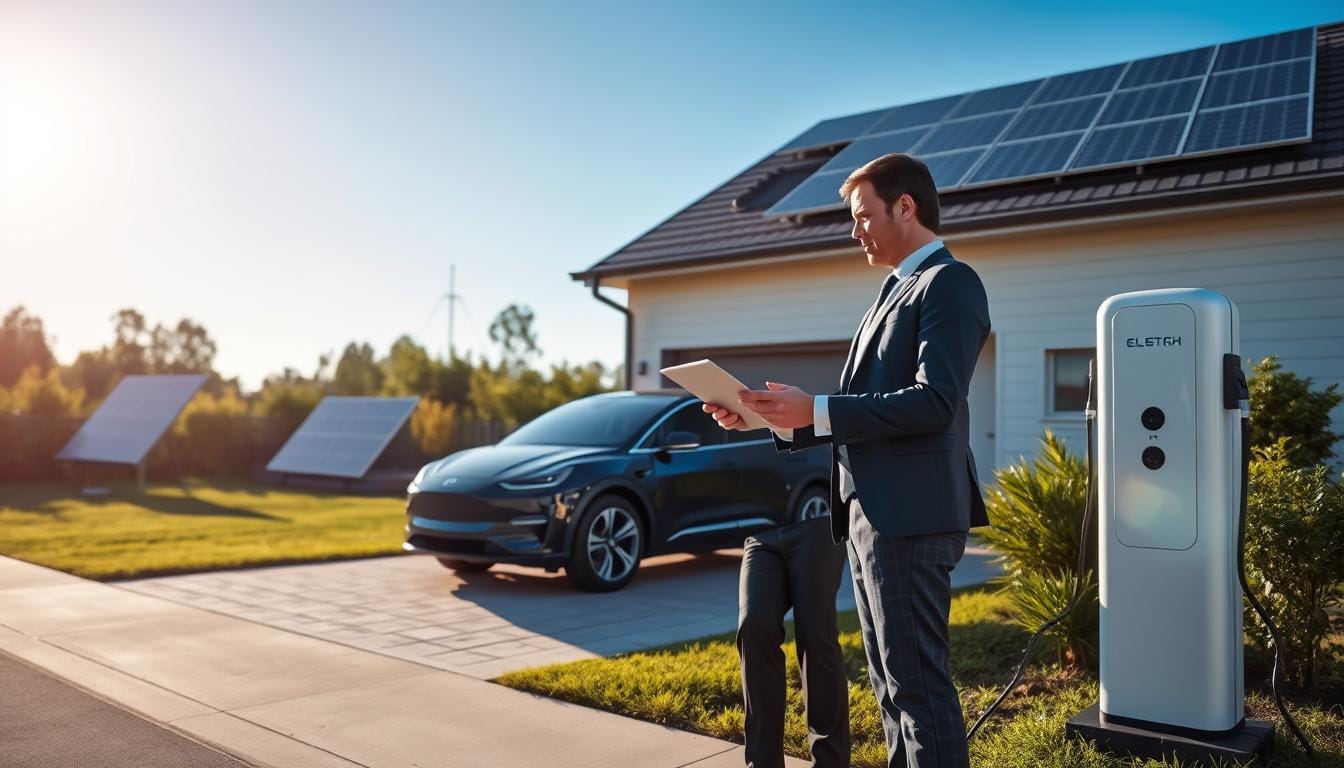
Solar energy can power your electric vehicle through sun-powered EV charging. You install solar panels to make electricity, which charges your EV. This cuts down on grid use and carbon emissions.
It’s simple: solar panels make electricity during the day. This power can go into a home battery or directly to your EV charger. So, you can charge your car with sunlight, making it a green choice.
Environmental Benefits of Using Solar for Charging
Charging your EV with solar energy boosts its green benefits. Solar power is clean and renewable, lowering your vehicle’s carbon footprint.
Choosing sun-powered EV charging options helps cut down on emissions. This is crucial as we move towards cleaner transport and energy.
Also, solar charging can save you money on energy bills. Making your own electricity means less grid use, leading to long-term savings.
Before switching to solar EV charging, check your energy needs. Find the right solar panel system for your home. This ensures enough power for your home and car.
Assessing Your Energy Needs
It’s important to know how much energy you use to pick the right solar panel system. This is true for your home and EV charging. You need to figure out your total energy use.
Calculating Your Household Energy Consumption
Start by looking at your past utility bills to find your average daily energy use. You can also use an energy audit tool or talk to a pro for a precise figure.
Here’s a simple way to estimate your energy use:
- List all your electrical appliances and their power ratings.
- Guess how many hours each appliance is used every day.
- Figure out your total daily energy use in kilowatt-hours (kWh).
| Appliance | Power Rating (W) | Daily Usage (h) | Daily Energy Consumption (kWh) |
|---|---|---|---|
| LED TV | 60 | 8 | 0.48 |
| Refrigerator | 150 | 24 | 3.6 |
| Air Conditioner | 1000 | 8 | 8 |
Estimating Your EV Charging Needs
Think about your EV’s battery size and how you drive to figure out your charging needs. Most EVs have batteries from 30 kWh to 100 kWh.
For example, if your EV has a 60 kWh battery and you drive 200 miles a week. With 3 miles per kWh, you need about 67 kWh a week, or 9.6 kWh a day.
By knowing your home’s energy use and EV charging needs, you can find the right solar panel system size. This makes your solar panel car charging setup efficient and saves money.
Choosing the Right Solar EV Home Charging
More people want to charge their cars with green energy at home. This makes picking the right solar system key. Knowing about different installations and what to look for is vital.
Types of Solar Installations
Solar systems fall into two main categories: rooftop and ground-mounted. Each has its own benefits and fits different situations.
- Rooftop Solar: This is the most common choice. It’s perfect for homes with enough roof space. Rooftop panels sit on your roof, making electricity efficiently.
- Ground-Mounted Solar: If your roof is small or you have land, ground-mounted systems work well. They’re set up on the ground, like in a backyard, for better sun exposure.
Key Considerations for Solar Panel Selection
When picking solar panels, think about a few things. This ensures your system fits your energy needs and budget.
| Factor | Description | Importance |
|---|---|---|
| Efficiency | The ability of solar panels to convert sunlight into electricity. | High |
| Durability | The lifespan and resilience of solar panels against environmental factors. | High |
| Cost | The initial investment required for purchasing and installing solar panels. | Medium |
By looking at these factors and knowing about solar types, you can pick wisely. This choice should match your energy needs and budget.
EV Charging Options: An Overview
Electric vehicle (EV) owners have many charging options. Each has its own benefits and drawbacks. Knowing these options helps make EV charging more efficient and convenient.
Level 1 Charging
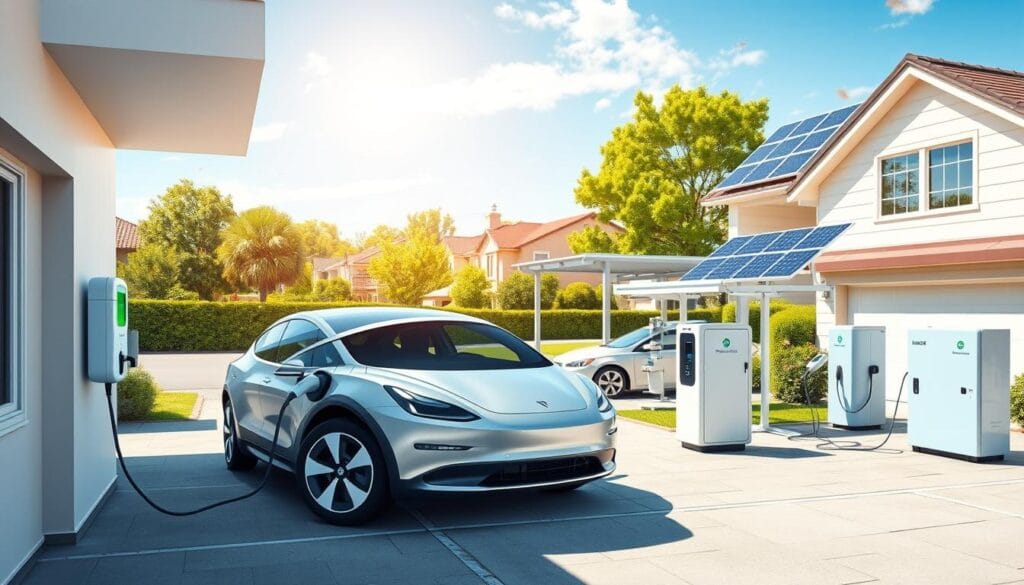
Level 1 charging uses a standard 120V household outlet. It’s easy to find but charges very slowly. You get 2-5 miles of range per hour. It’s great for overnight charging at home but might not be enough for daily use.
Level 2 Charging
Level 2 charging needs a 240V charging station. It charges much faster than Level 1, giving 10-25 miles of range per hour. This level is perfect for daily driving and can be installed at home or found at public stations.
DC Fast Charging
DC Fast Charging is the fastest, charging an EV to 80% in under 30 minutes. It’s ideal for long trips or emergency top-ups. But, it needs special equipment and is mostly found on highways or at fast-charging stations.
| Charging Level | Voltage | Charging Speed | Typical Use |
|---|---|---|---|
| Level 1 | 120V | 2-5 miles/hour | Overnight home charging |
| Level 2 | 240V | 10-25 miles/hour | Daily driving, home, and public charging |
| DC Fast Charging | Varies | 80% in | Long trips, emergency charging |
By knowing the different EV charging options, you can pick the best one for your lifestyle. This ensures a convenient and eco-friendly EV experience.
Integrating Solar with EV Charging
When you think about using solar energy for EV charging, knowing the right gear is key. This setup boosts your solar system’s efficiency and makes charging your electric car green.
To make it work smoothly, focus on solar inverters and chargers, and smart charging tech. These parts help use energy better and charge your car efficiently.
Solar Inverters and Chargers
A solar inverter is vital for turning DC power from solar panels into AC power for your home and EV charger. Pick an inverter that fits your EV charger well and is good at DC to AC conversion.
Your EV charger must match your solar inverter. There are Level 1, Level 2, and DC Fast Chargers. Choose based on your car and charging needs.
| Inverter Type | Compatibility | Efficiency |
|---|---|---|
| String Inverter | High | 95% |
| Micro Inverter | Medium | 96% |
| Hybrid Inverter | High | 97% |
Smart Charging Solutions
Smart charging tech is crucial for a better EV charging experience. It tracks your energy use, predicts needs, and adjusts charging times.
Smart charging lets you charge when energy is cheapest and most available. This cuts costs and reduces carbon emissions.
- Optimized energy usage
- Reduced energy costs
- Enhanced charging convenience
- Environmental benefits
By combining solar energy with EV charging and smart tech, you create a green and efficient home energy system.
Costs Associated with Solar and EV Charging
Thinking about solar-powered electric vehicle (EV) charging? It’s important to know the costs. The upfront cost for solar panels and EV charging gear is big. But, you might save money on energy in the long run.
Initial Investment for Solar Panels
Solar panel prices have gone down, making them more affordable. Still, the cost depends on several things. These include the system size, panel type, and installation costs. A typical home solar system can cost between $15,000 and $25,000 before any discounts.
Several factors affect the cost of solar panels:
- System Size: Bigger systems cost more but make more electricity.
- Panel Efficiency: More efficient panels are pricier but save money over time.
- Installation Costs: Things like labor, permits, and inspections add to the total cost.
EV Charger Installation Costs
Installing an EV charger at home varies in cost. Level 2 chargers, common for homes, cost between $500 and $2,000, including setup. DC Fast Chargers, used for businesses, are pricier, often over $3,000.
Important factors for EV charger costs include:
- Type of Charger: Level 1, Level 2, or DC Fast Charging.
- Electrical Panel Upgrades: Your home’s electrical panel might need an upgrade for the charger.
- Permits and Inspections: Local rules may require permits, increasing the cost.
Long-term Savings Potential
The upfront cost for solar panels and EV chargers is high. But, the long-term savings are big. Making your own clean energy can cut or eliminate your electricity bills. Plus, charging your EV with solar saves on fuel costs.
Here are some long-term savings:
- Reduced Electricity Bills: Solar energy can greatly lower your utility bills.
- Lower Fuel Costs: Solar-charged EVs save on gasoline.
- Incentives and Rebates: Many incentives can help cover the initial cost.
Incentives for Solar and EV Adoption
Using federal, state, and local incentives can lower the cost of going solar and buying electric vehicles (EVs). These incentives aim to boost the use of renewable energy and green transportation.
Federal Tax Credits
The government gives tax credits for solar panels and EVs. The Solar Investment Tax Credit (ITC) lets you claim a part of your solar system’s cost as a tax credit. The Electric Vehicle Tax Credit offers up to $7,500 for buying an eligible EV.
State and Local Incentives
States and local governments also offer incentives for solar and EVs. These can be rebates, tax credits, or fee exemptions. For instance, some states give up to $1,000 for solar panel installations. Check with your state and local government for available incentives.
Utility Rebates
Utility companies also provide rebates and incentives for solar and EVs. They offer rebates for solar panels and EV chargers. They also have special rates for those who generate their own energy or charge EVs during off-peak hours.
Here’s a summary of the incentives available:
| Incentive Type | Description | Potential Savings |
|---|---|---|
| Federal Tax Credits | Tax credits for solar installations and EV purchases | Up to 26% of total cost |
| State and Local Incentives | Rebates, tax credits, and fee exemptions | Varies by state and locality |
| Utility Rebates | Rebates for solar panels and EV chargers | Up to $1,000 or more |
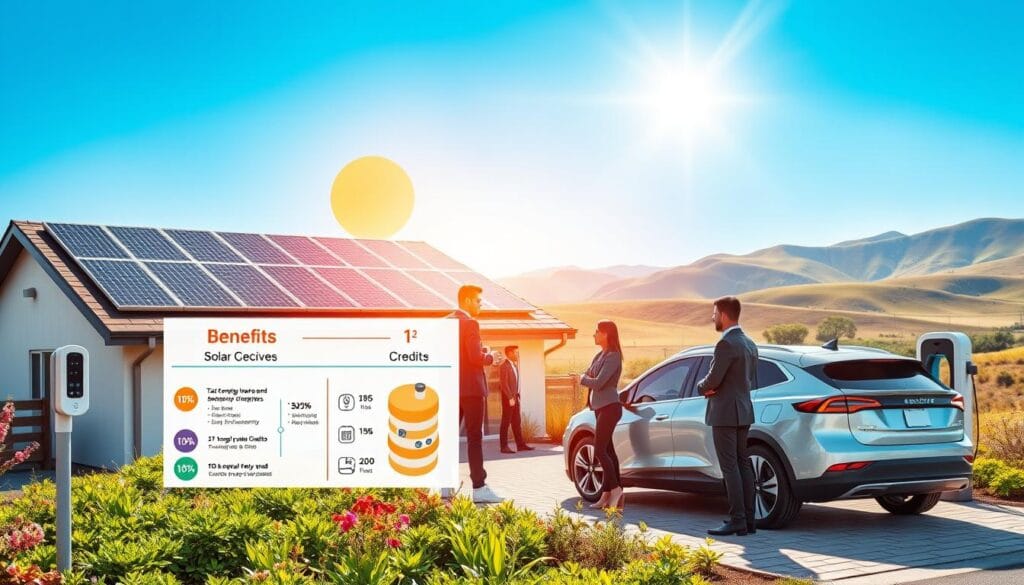
By using these incentives, you can cut down the cost of solar energy and EVs. Make sure to look into the incentives in your area and include them in your plans.
Installation Considerations
Getting solar panels to charge your car needs careful planning. It’s key to know what makes the process go smoothly. This ensures your solar and EV charging work well together.
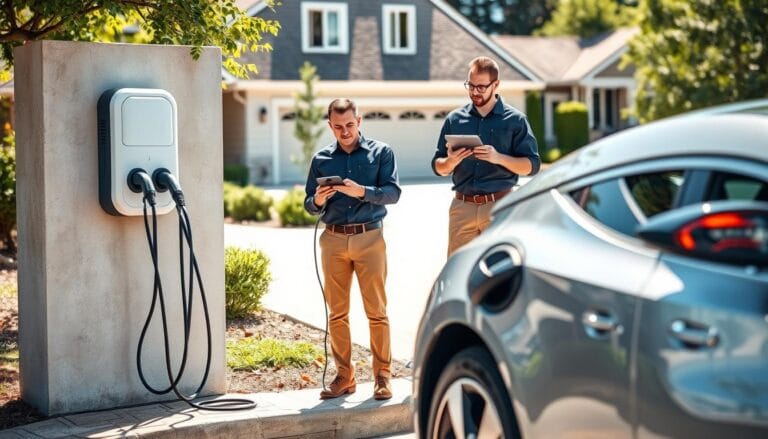
Finding a Qualified Installer
Finding the right installer is crucial. Look for someone with experience in solar and EV charging. Check their credentials and read reviews to make sure they’re reliable.
Get quotes from different installers to compare. Ask about their experience and how they handle problems. This helps you find the best fit for your needs.
Permits and Regulations
Dealing with permits and rules can be tricky. Work with your installer to understand local laws. These rules can change a lot depending on where you live.
A good installer knows the local codes and regulations. They make sure your setup meets all standards. This avoids legal and safety problems later on.
| Permit Type | Description | Typical Cost |
|---|---|---|
| Building Permit | Required for the construction or modification of a building or structure. | $100-$500 |
| Electrical Permit | Necessary for electrical work, including the installation of solar panels and EV charging equipment. | $50-$200 |
Timeframe for Installation
The time it takes to install solar panels and EV charging varies. It depends on the job’s complexity and material availability.
Simple installations might take a few days to weeks. More complex ones or those needing extra permits could take longer. Your installer should give you a clear timeline and keep you updated.
Maintaining Your Solar and EV Charging System
Keeping your solar panel system and electric vehicle home charging setup in good shape is key. Regular upkeep ensures your equipment lasts longer and saves more energy.
Regular Maintenance Tips for Solar EV Home Charging
To keep your solar panels working well, follow these tips:
- Regularly clean your solar panels to remove dirt and debris.
- Inspect your solar panels for damage or wear.
- Ensure that your solar panels are free from shading.
Cleaning your solar panels is easy. Use a soft brush and water. Stay away from harsh chemicals or abrasive materials that could harm the panels.
“Regular cleaning of solar panels can improve their efficiency by up to 25%.” –
Keeping Your EV Charger in Top Shape
Your EV charger needs just as much care as your solar panels. Here are some tips:
| Maintenance Task | Frequency | Benefit |
|---|---|---|
| Inspect charger for damage | Monthly | Prevents electrical issues |
| Clean charger contacts | Quarterly | Ensures efficient charging |
| Update charger software | As needed | Enhances charger performance |
By following these maintenance tips, your solar and EV charging system will keep working efficiently. This ensures a smooth and effective energy experience.
Regular maintenance is a small price for the long-term benefits of your solar and EV charging system. By keeping up with maintenance, you get a seamless and efficient energy experience.
Future Trends in Solar and EV Charging
When looking into sun-powered EV charging for your home, it’s key to think about the future. The mix of solar energy and electric vehicle charging is getting better. New solar tech is a big part of this progress.
Advancements in Solar Technology
New tech is making solar panels work better, helping you make more green energy for your car. For example, bifacial solar panels catch sunlight on both sides. This means they make more energy.
Smart Home Integration
Smart home tech is changing how we charge our EVs. With smart charging, you can use solar energy when it’s there. This cuts down on your need for the grid.
By going for these new techs, you can charge your EV in a greener, cheaper way. As the field grows, knowing the latest news will help you use your sun-powered EV charging to the fullest.