Vehicle-to-Home Charging: How Your EV Can Power Your House
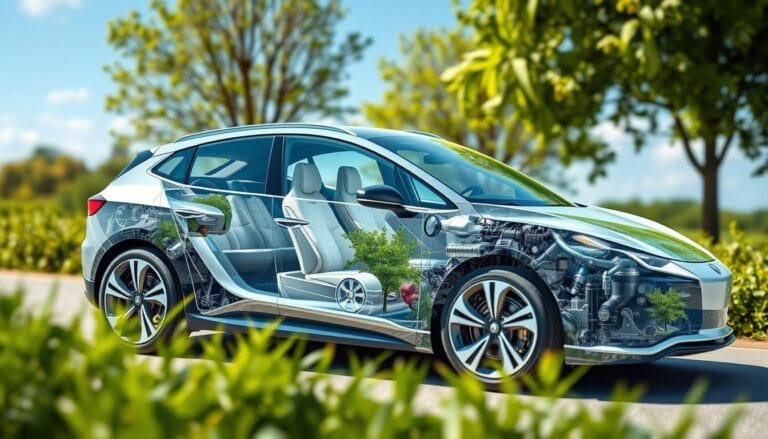
What if your electric vehicle could do more than take you to work? With the right equipment, it can also help keep the lights on, use more of your solar power, and reduce your reliance on expensive peak-time electricity. That idea—called vehicle-to-home charging, or V2H—is moving from an intriguing demonstration to a practical conversation for EV owners.
The timing is important. Electric vehicle adoption is still expanding, but buyers are also asking harder questions about value, resilience, charging costs, and how a larger battery can work with the rest of the home. BloombergNEF’s 2026 Electric Vehicle Outlook projects 23.3 million passenger EV sales globally in 2026, up 11% from 2025, while public charging connectors reached 6.7 million in 2025. As more batteries arrive in driveways, the question is no longer only how quickly they can charge. It is how intelligently they can share energy.
What Is Vehicle-to-Home Charging?
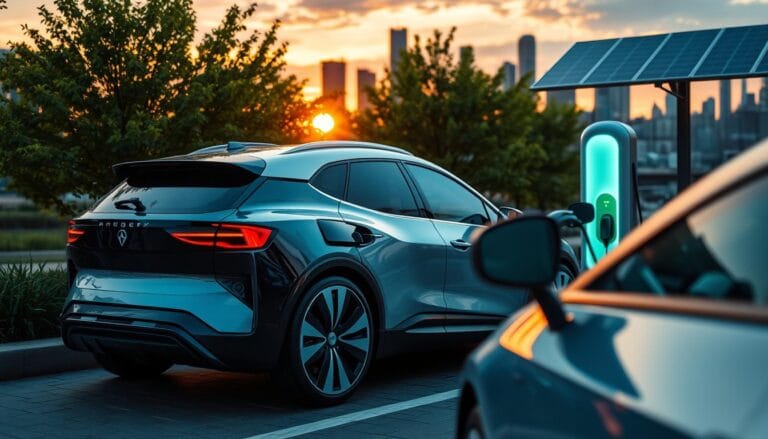
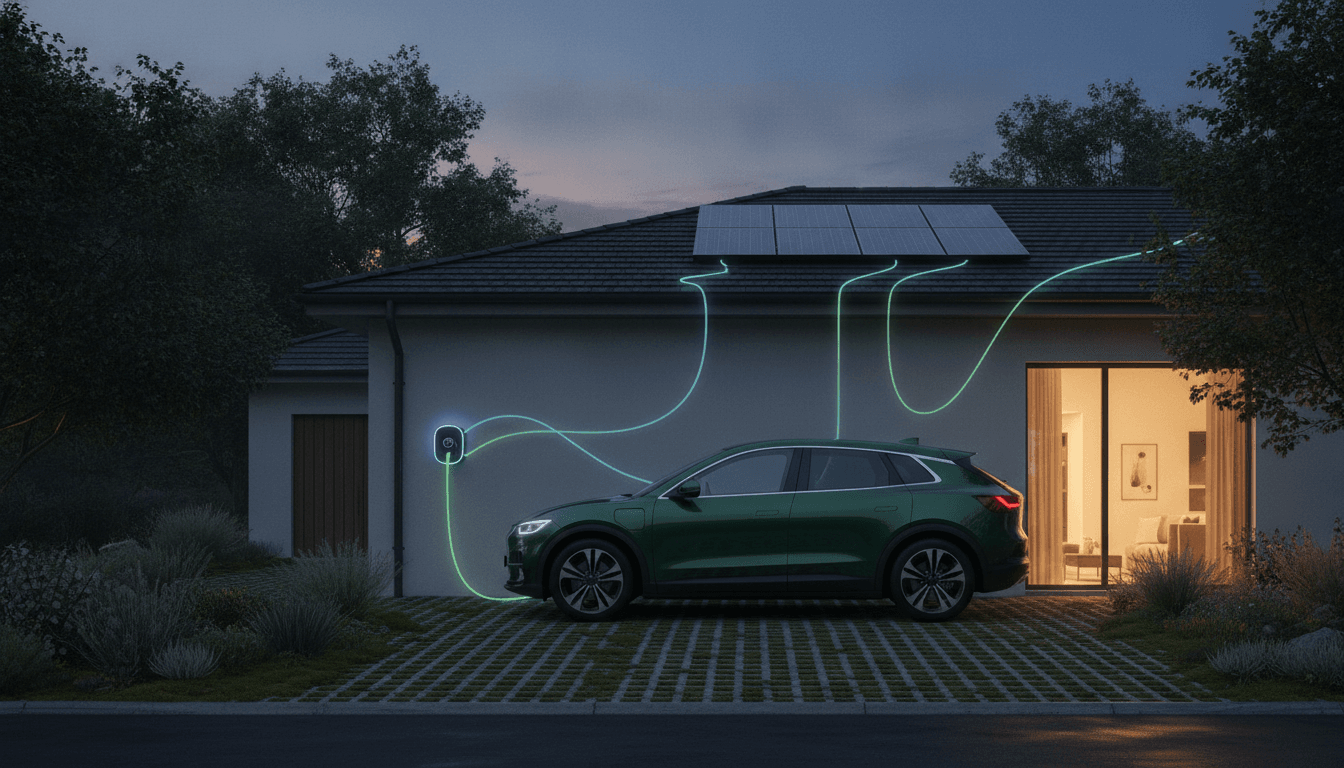
Vehicle-to-home charging allows an EV battery to send electricity back to a home through a compatible bidirectional charger. In a normal charging session, electricity flows one way: from the grid or a solar array into the vehicle. With V2H, the system can reverse that flow when the home needs energy.
A properly installed system typically includes four parts: an EV with bidirectional power capability, a compatible home energy system, a bidirectional charger or power-control unit, and software that manages when energy should move. Some systems can power selected circuits during an outage; others can support much of the home, depending on their design and electrical capacity.
V2H is different from vehicle-to-grid (V2G). V2G sends energy from the vehicle back to the utility grid, usually under an approved program. Vehicle-to-load (V2L) is another related feature: it lets an EV run appliances or tools directly, often through an outlet or adapter, without integrating the car into the home’s electrical panel.
Why Vehicle-to-Home Is Trending Now
Three developments are bringing V2H into sharper focus. First, EV batteries are getting larger, while many households are adding solar panels, heat pumps, and smart electrical equipment. That creates a useful pool of stored energy.
Second, electricity prices are increasingly time-sensitive in many regions. A home may charge an EV when rates are low, then use some of that stored energy during a high-price period. The savings depend on local tariffs, equipment costs, and battery rules, but the basic idea is straightforward: charge strategically rather than automatically at any hour.
Third, resilience has become a stronger reason to consider home energy storage. Severe weather and grid interruptions have made backup power a practical concern, not merely a luxury. An EV battery can be much larger than a typical home battery, although it is not a universal substitute for one.
Industry research also points to a maturing charging ecosystem. BloombergNEF reports that public charging networks grew 28% in 2025 and expects new installations to continue growing in 2026. As charging hardware and energy-management software improve, bidirectional charging is becoming easier for automakers, utilities, and homeowners to evaluate.
How a V2H System Works
1. The vehicle charges at the right time
The system first charges the EV from the grid or from rooftop solar. A smart controller may schedule charging overnight, during a renewable-energy surplus, or whenever a utility’s off-peak rate is available. Owners can normally set a minimum state of charge so the car is ready for the next trip.
2. The home uses stored energy when it makes sense
When household demand rises, the controller can send electricity from the vehicle to the home. That might happen during an evening peak, when clouds reduce solar production, or when the grid fails. The system should prioritize essential needs and respect the driver’s mobility plan.
3. The controller balances safety and convenience
V2H is not simply a cable with electricity flowing in reverse. The equipment must synchronize with the home’s electrical system, disconnect safely from the utility during an outage, and prevent unplanned export where regulations prohibit it. Certified hardware and a qualified installer are essential.
Potential Benefits for EV Owners
Lower charging and household energy costs
V2H can help a household avoid some high-priced electricity by charging at a lower rate and using the battery later. Solar owners may also be able to keep more midday solar energy for evening use instead of exporting it at a less favorable rate. The financial result is highly local, so compare your tariff, export credit, and system losses before assuming a specific payback.
Backup power during an outage
A bidirectional EV system can provide backup electricity when the grid is down, provided the vehicle is at home, charged, and connected to equipment designed for backup operation. Some installations support only selected circuits, such as a refrigerator, internet equipment, lights, and a furnace blower. Others can cover more of the home, but larger loads may drain the battery quickly.
Better use of renewable energy
Solar energy is cleanest when it replaces electricity that would otherwise come from a more carbon-intensive source. Using the EV as a flexible storage resource can reduce curtailment and increase the share of household demand served by onsite generation. It also gives drivers a reason to think about charging as part of an energy system rather than as a single daily task.
More flexibility as the grid changes
As more solar, wind, heat pumps, and EVs connect to the grid, demand becomes more flexible. A smart EV can charge when electricity is abundant and pause when the system is stressed. In the future, utility programs may compensate owners for making that flexibility available, although program availability varies by region.
V2H Compared With a Home Battery
A home battery is permanently installed and available whenever the home needs it. An EV is mobile, which is both its greatest strength and its biggest limitation. A home battery can protect a house while the owner is driving; a V2H system cannot use the vehicle when it is away or below its reserve setting.
EV batteries can offer substantial capacity, but frequent energy cycling may affect long-term battery wear. Modern battery-management systems are designed to control this, and the real impact depends on chemistry, temperature, depth of discharge, and how the automaker defines its warranty. Read the warranty language instead of relying on general claims about battery degradation.
Cost is another important comparison. A home battery may be simpler to integrate, while V2H requires a compatible vehicle, bidirectional hardware, installation, and sometimes a panel upgrade. The best choice may be a combination: a home battery for always-on resilience and an EV for extra capacity when it is parked.
What You Need Before Installing V2H
- A compatible EV: Not every electric car supports bidirectional home power. Check the exact model year, trim, software version, and approved equipment list.
- A compatible charger: A conventional Level 2 charger is not automatically a V2H charger. Bidirectional units have different electrical and communication requirements.
- A suitable electrical panel: Older panels may need an upgrade or a load-management device. Ask an installer to assess service capacity and essential circuits.
- Permits and utility approval: Backup and export rules differ. Your installer should handle the relevant inspection and utility process.
- A realistic driving reserve: Set the minimum charge around your normal commute, weather conditions, and access to public charging.
- Reliable software: Scheduling, outage detection, solar integration, and remote controls are central to the experience. Ask how the system behaves when internet service is unavailable.
Questions to Ask Before You Buy
Will it work with my current solar system?
Some systems integrate neatly with a specific inverter or energy-management platform; others require additional hardware. Get the proposed wiring diagram and confirm whether solar production continues during an outage.
How much of my home can it power?
Ask for a written list of supported circuits and expected runtime under realistic loads. Heating, cooling, electric water heating, and vehicle charging can consume energy quickly. A system sized for lights and refrigeration is not the same as one sized for whole-home backup.
How does the warranty treat bidirectional use?
Ask whether energy sent to the home counts differently from ordinary driving and charging. Confirm the covered battery capacity, cycle limits, equipment warranty, and software support period.
What happens if I need the car unexpectedly?
A good system should let you override the schedule and preserve a chosen reserve. Test the app and the manual controls before signing off on the installation. Convenience is part of the value proposition.
Practical Ways to Get Ready
You do not need to install V2H immediately to prepare for it. Start by recording your electricity use, utility rate periods, solar production, and the circuits you would want during an outage. This information will make installer quotes more useful.
Next, learn your EV’s charging limits and battery warranty. If you are shopping for a vehicle, add bidirectional charging to your comparison list alongside range, efficiency, cargo space, and price. Compatibility today can be more valuable than a vague promise of future capability.
Finally, improve basic efficiency first. LED lighting, weather sealing, efficient appliances, and smart thermostat settings reduce the amount of stored energy your home needs. The cleanest and least expensive kilowatt-hour is still the one you do not need to use.
The Limits and Trade-Offs
V2H is promising, but it is not free energy. Charging and discharging create losses, equipment costs money, and the vehicle may not be available when the home needs backup. A system can also be less attractive where electricity rates are flat, solar export credits are generous, or outages are rare.
There are technical and regulatory differences between regions as well. Interconnection rules, electrical codes, utility programs, incentives, and approved hardware can change quickly. Treat marketing claims as a starting point and ask for system-specific documentation.
Battery durability deserves a balanced view. Using the battery for home support adds cycles, but the amount may be modest if the system uses a narrow operating window and the owner keeps a reserve. The right question is not whether cycling exists; it is whether the expected savings and resilience justify the added use under the manufacturer’s warranty.
What Vehicle-to-Home Charging Means for Sustainable Driving
V2H does not make every household automatically carbon-free. Its environmental value depends on the electricity mix, the vehicle’s efficiency, the equipment’s manufacturing footprint, and how often it displaces fossil-fuel generation. Still, smarter charging can make electric transportation work better with renewable energy.
The broader shift is important. EVs are increasingly connected to homes, buildings, and the grid. That connection can reduce peak demand, improve resilience, and help households use clean electricity when it is available. It also encourages drivers to consider the full energy lifecycle of a trip—not just the tailpipe.
Final Takeaway
Vehicle-to-home charging is one of the most practical emerging EV technologies because it links transportation with everyday household energy. It can offer backup power, better solar self-consumption, and potential savings, but only when the vehicle, charger, home wiring, utility rules, and warranty all line up.
If you are considering the technology, begin with your real electricity use and driving routine. Compare a V2H quote with a home battery, ask precise questions about compatibility and warranty coverage, and keep enough charge for the journeys that matter. The smartest EV is not simply the one with the biggest battery—it is the one that fits your life and uses energy thoughtfully.
Sources consulted: BloombergNEF, Electric Vehicle Outlook 2026; Reuters reporting on EV batteries supporting homes; current EV owner discussions and charging industry coverage.