EV Charging for Apartment Renters: Practical Options That Work
Living in an apartment does not automatically rule out driving an electric vehicle. But if you cannot plug in at home, charging takes a little more planning—and the right routine depends on your parking, commute, local network, and landlord. The good news: renters have more than one path to a dependable charge, and you can often test the routine before you buy.
This guide explains EV charging for apartment renters in plain language: how to ask for a charger, what to do if installation is not possible, how to manage public charging, and what to check before choosing an EV. The aim is not to promise that every setup will work, but to help you make a realistic plan.
Can you own an EV without a home charger?
Yes, some apartment residents successfully own EVs without a private charger. They may charge at work, use public Level 2 stations near places they already visit, or make occasional trips to a DC fast-charging site. Whether this is convenient depends on the location and your weekly driving—not just the car’s advertised range.
Think of charging as a routine rather than a single destination. A driver with reliable workplace charging and a short commute may rarely need a public fast charger. Someone who parks on the street, drives long distances, and has few nearby stations may find the same arrangement frustrating or expensive. Check the actual stations around your home, job, grocery store, and regular routes before making a purchase.
Start with your building and parking situation
“Apartment charging” can mean several different things. You might have an assigned space beside an electrical room, an unassigned space in a shared garage, a carport, or only street parking. Each situation affects who can authorize equipment, how electricity can be metered, and whether a cable can safely reach your car.
Ask the right person, in writing
Contact the property manager or owner before buying equipment. Explain where you park, whether the space is assigned, what kind of charging you are considering, and how you would pay for the electricity. Ask whether the building already has a charger, a plan to install one, or an approved electrician familiar with EV charging.
Useful questions include:
- Is EV charging allowed in my assigned space or garage?
- Is there a building policy, application, or approved-vendor list?
- Can a licensed electrician assess the panel and route wiring safely?
- How will electricity use be measured and billed?
- Would the charger be private to my space or shared among residents?
- Who maintains the equipment, and what happens when I move?
Keep the discussion practical and collaborative. A professionally installed, metered charger can address concerns about electrical safety, cost allocation, and access. Do not run an extension cord across a walkway or plug into an outlet that has not been approved for vehicle charging. A cable can create a trip hazard, and an ordinary outlet or circuit may not be suitable for sustained charging.
Check local rules instead of assuming a universal “right to charge”
Some states and cities have laws addressing EV charging in multifamily buildings or the right of a tenant or condominium owner to install a charger under specified conditions. The details differ: rules may cover assigned parking, permits, insurance, installation standards, cost responsibility, and landlord approval. Other places may have no comparable protection.
Look up current guidance from your state or local government, housing agency, utility, or a qualified local attorney. Ask the property manager what process applies at your building. Do not treat a rule from another state—or a general online summary—as automatic permission to install equipment.
Four practical charging options for renters
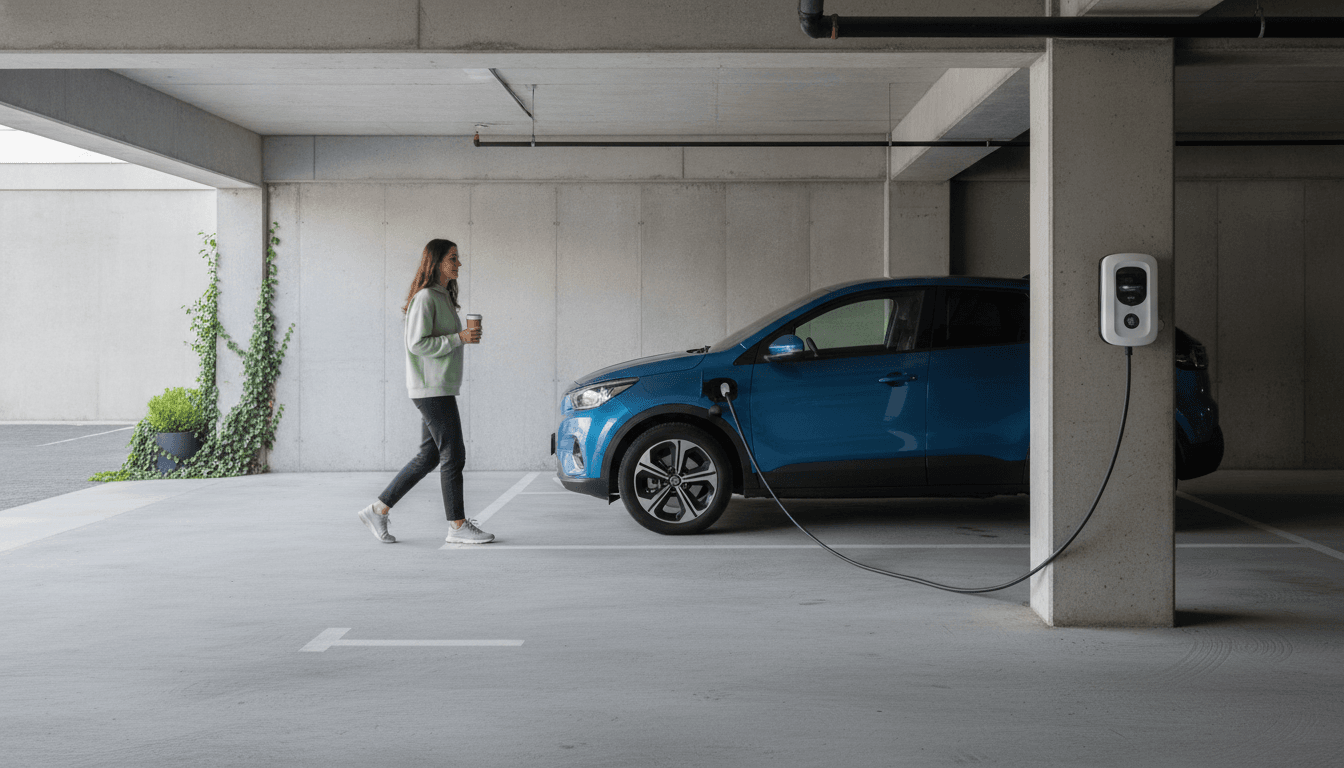
1. Request a dedicated Level 2 charger
Level 2 charging uses a higher-voltage supply than a standard household outlet and is commonly installed in garages, workplaces, and public parking. A dedicated charger near your assigned space can make apartment EV ownership feel much like charging at home. The building may install and operate it, or may approve a resident-funded installation, depending on the property and local rules.
Installation cost is site-specific. The distance to the electrical service, available capacity, trenching, permits, equipment, and need for electrical upgrades all matter. Ask for an assessment rather than relying on a generic online price. Load management—technology that coordinates charging so multiple vehicles can share available electrical capacity—may help a property serve more spaces without treating every charger as if it must draw its maximum power at once.
2. Use shared charging at your building
A shared charger can be a useful first step for a property that cannot install a unit at every parking space. Ask how reservations work, whether there is a time limit, how payment is handled, and what residents should do when a vehicle is finished charging. A workable policy matters as much as the hardware: clear pricing, fair access, and rules against blocking a charger help keep the system useful.
3. Charge at work or another regular destination
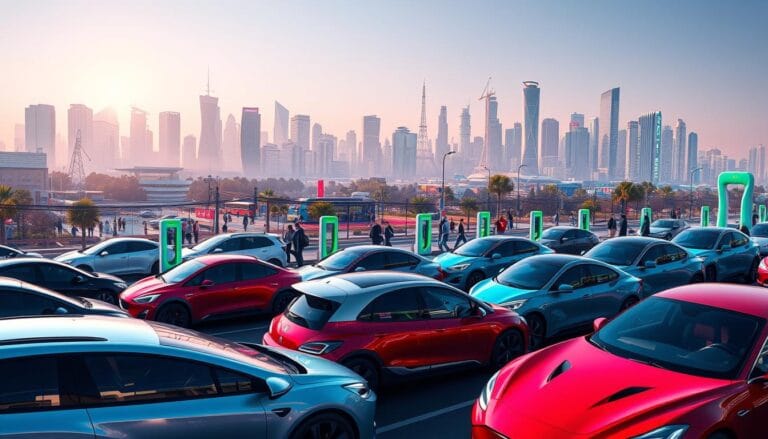
Workplace charging can fit naturally into a regular day, especially if your employer offers predictable access. Ask about availability, fees, parking rules, and whether chargers are open to employees or visitors. A nearby public Level 2 station at a gym, library, shopping center, or community parking facility may also be convenient if you can leave the car there for the time it takes to charge.
Before depending on any destination charger, confirm its current availability and operating hours. A charger shown on a map may be occupied, temporarily offline, behind a gate, or restricted to customers. Try the route once before making it your only plan.
4. Build a public-charging routine
Public charging can fill the gap, but it requires more attention to location, price, time, and reliability. Use a charging-network app and an independent map to compare nearby stations. Check recent user reports, connector compatibility, access instructions, and the posted price. Where possible, identify a backup location rather than relying on a single charger.
DC fast charging is designed to add energy more quickly than Level 2, but actual charging speed varies with the car, charger, battery temperature, battery state of charge, and charging curve. It is often most useful on a road trip or when you need a meaningful charge away from home—not necessarily as the cheapest or most relaxing everyday routine. Repeated fast charging is not automatically harmful, but your owner’s manual and the vehicle maker’s guidance should inform your habits.
Understand the charging levels before planning
Level 1 charging uses a standard household-style outlet with the vehicle’s approved charging cord, where an appropriate outlet is available and permitted. It adds energy slowly, so it may suit some low-mileage drivers but is not a guaranteed solution for a renter who parks far from an outlet. Never assume a garage receptacle is safe or available for vehicle charging without the owner’s permission and a qualified assessment.
Level 2 is the common choice for overnight or destination charging. It requires suitable electrical equipment, but may be installed in shared garages and workplaces. DC fast charging is usually found at public sites and can be useful for a quicker stop, but the vehicle and charger must have compatible connectors and charging capability. Charging speeds are not constant: a car may slow as its battery fills or under temperature constraints. The maximum number printed on a charger is not a promise that every vehicle will receive that rate.
For a renter, the practical question is less “Which level is fastest?” and more “Which level is accessible where I already park or spend time?” A modest Level 2 session during a regular workday can be easier than a faster charger that requires a special trip. Read your vehicle manual for charging instructions and use properly installed, compatible equipment.
How to compare charging costs and convenience
Do not compare a public charging rate with your home utility rate without looking at the full picture. Public networks may charge by energy, time, session, or a combination, and prices can vary by location or time of day. Memberships may reduce a rate but only make sense if you use that network often. Parking fees can be separate from electricity charges.
Estimate your personal monthly cost using the driving you actually expect to do. Review your current miles, then compare the cost of charging at likely stations with the fuel and maintenance costs of the vehicles you are considering. Include time: a lower-priced charger that requires an inconvenient detour may not be the best fit. Utilities sometimes offer time-of-use rates or programs for EV charging, but eligibility and terms vary; ask your utility directly.
Also consider the time spent plugging in, waiting, moving your car, or walking back to a parking location. A reliable workplace or building charger can be more valuable than a faster station that is out of the way. As the U.S. Department of Energy’s Alternative Fuels Data Center notes, multifamily charging involves practical questions such as parking, electrical access, billing, and property arrangements. Its multifamily housing charging resources include guidance for both property owners and residents.
A simple cost worksheet
Before deciding, write down your estimated weekly driving, the likely charging locations, each station’s posted price, any parking or membership fee, and the travel time to reach it. Then make a conservative monthly estimate using the stations you can realistically access—not the cheapest station across town. Repeat the estimate with a backup charger in case your first choice is occupied or offline. This is not a prediction of exact future costs; it is a way to see whether the routine fits your household budget.
Shared-charger etiquette and reliability
When a charger is shared, courtesy helps everyone get where they need to go. Follow the posted time limit, move your car when charging is complete if the space is intended for active charging, and do not unplug another vehicle unless the site rules clearly permit it. Use the network’s messaging or support channel to report equipment problems rather than trying to repair a station yourself.
Build a little flexibility into your plan. Save a second nearby charging location, keep your network account and payment method current, and check station status before setting out. If a charger is out of service, a safe backup plan is more useful than arriving with a nearly empty battery and hoping. For street parking, do not stretch a cable across a sidewalk or public path; use authorized charging locations that do not block pedestrians, wheelchair users, or other residents.
Choose an EV that fits life without a private plug
When shopping, match the vehicle to your daily routine rather than buying extra range as a substitute for checking charging access. Consider your ordinary round-trip commute, occasional long drives, cold-weather needs, passenger and cargo requirements, and the charging connectors supported by the car. Read independent reviews and check the exact trim: range and charging performance can differ between versions.
Ask a dealer or manufacturer representative about battery warranty terms, recommended charging practices, and whether the vehicle can use the charging networks near you. If you are considering a plug-in hybrid, remember that it still uses gasoline and needs regular refueling; electric driving depends on charging it. It may be a useful bridge for some households, but it does not remove the need to understand your charging options.
Most importantly, do a trial run. Use your likely public or workplace charging routine for a few weeks—perhaps with a rental EV, a borrowed vehicle, or a test drive that allows enough time to visit a charger. That can reveal whether stations are available when you need them, how much the routine costs, and whether the walk or wait is manageable.
Questions to ask before you commit
- Can I charge close to home or work at the times I actually need to?
- Are the chargers open to residents, employees, or the public, and do they require an app or account?
- What happens if the nearest station is occupied, broken, or closed?
- Can I safely and legally install a charger at my assigned space, and who pays for the equipment and electricity?
- Do the car’s charging port and maximum charging rate fit the stations on my routine routes?
- Can I tolerate the likely charging time and walking distance during bad weather or a busy week?
A simple plan before you buy
- Map several chargers near home, work, and regular destinations; verify access and recent operating status.
- Ask your landlord or property manager in writing about existing chargers, shared access, and a safe installation process.
- Check local tenant, building, and permitting rules, as well as utility programs that may apply.
- Estimate total charging cost and time using your real weekly mileage and the stations you would use.
- Keep a backup charging location and understand the car’s connector and charging limits.
- Try the routine before committing, especially if public charging would be your primary source.
The bottom line on EV charging for apartment renters
Apartment living makes EV charging more dependent on planning, but it does not make electric driving impossible. The strongest setup is usually one that fits an existing routine: a building charger, a dependable workplace station, or convenient public Level 2 charging, with fast charging available when needed. The weakest plan is one based on a single unverified charger or an assumption that a landlord, law, or network will work a particular way.
Start with your parking space, ask clear questions, verify local rules, and test the stations you would actually use. If the schedule and cost work for your life, an EV can be a practical choice even without a private garage. If they do not, keep comparing options rather than forcing a decision. A thoughtful charging plan is the key to making apartment EV ownership convenient, affordable, and sustainable.